
 Michael Jackson: una breve biografía
Conocido como el “Rey del Pop”, Michael Jackson fue un cantante, compositor y bailarín estadounidense que vendió millones de discos. De niño, Jackson se convirtió en el cantante principal del popular grupo Motown de su familia, los Jackson 5. Luego continuó con una carrera en solitario de asombroso éxito mundial, entregando éxitos número 1 de los álbumes Off the Wall, Thriller y Bad. Thriller sigue siendo uno de los álbumes más vendidos de todos los tiempos. En sus últimos años, Jackson fue acosado por acusaciones de abuso infantil. El ganador de 13 premios Grammy murió en 2009 a los 50 años debido a una sobredosis de drogas justo antes de lanzar una gira de regreso.
Primera vida y familia
Michael Joseph Jackson nació el 29 de agosto de 1958 en Gary, Indiana. Fue el octavo de 10 hijos nacidos de Joseph Jackson, un operador de grúas, y Katherine Jackson, una ama de casa y testigo de Jehová devota. Ambos padres de Jackson tenían aspiraciones musicales: Katherine tocaba el clarinete y el piano y aspiraba a ser cantante de country, mientras que Joseph era un guitarrista que actuaba en bandas locales de R&B. Animaron a sus hijos a seguir ambiciones musicales, y la carrera de Jackson comenzó a los 5 años bajo la guía de su padre.
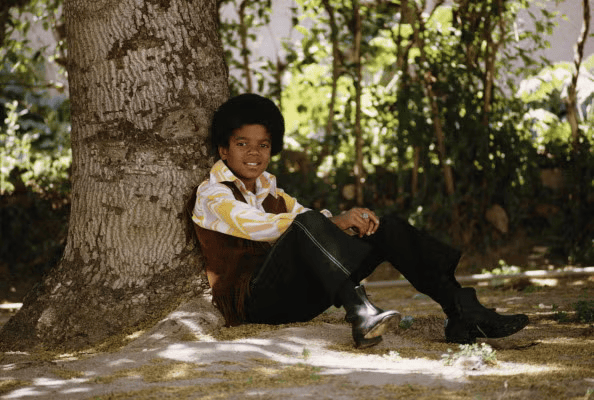
Casi todos los hermanos de Jackson dejaron su huella en la industria musical, incluidos Rebbie, Jackie, Tito, Jermaine, La Toya, Marlon, Randy y Janet Jackson. (Su hermano Brandon, el gemelo de Marlon, murió poco después de nacer). Joseph empujó a sus hijos con fuerza para que tuvieran éxito, haciéndolos ensayar cinco horas al día después de la escuela, y se decía que se volvía violento con ellos. Se decía que los golpeaba con una hebilla de cinturón o con el cable de una tetera eléctrica y que les ordenaba romper una rama de un árbol si se equivocaban en un paso de baile, para poder golpearlos con ella.
Los Jackson 5
Joseph moldeó a sus hijos en un grupo musical a principios de la década de 1960 que más tarde se conocería como los Jackson 5. Al principio, el grupo familiar Jackson estaba formado por los hermanos mayores de Jackson, Tito, Jermaine y Jackie. Jackson se unió a sus hermanos a los 5 años y emergió como el vocalista principal del grupo. Mostró un rango y profundidad notables para un intérprete tan joven, impresionando al público con su capacidad para transmitir emociones complejas. Se convirtieron oficialmente en los Jackson 5 cuando su hermano mayor, Marlon, se unió al grupo.
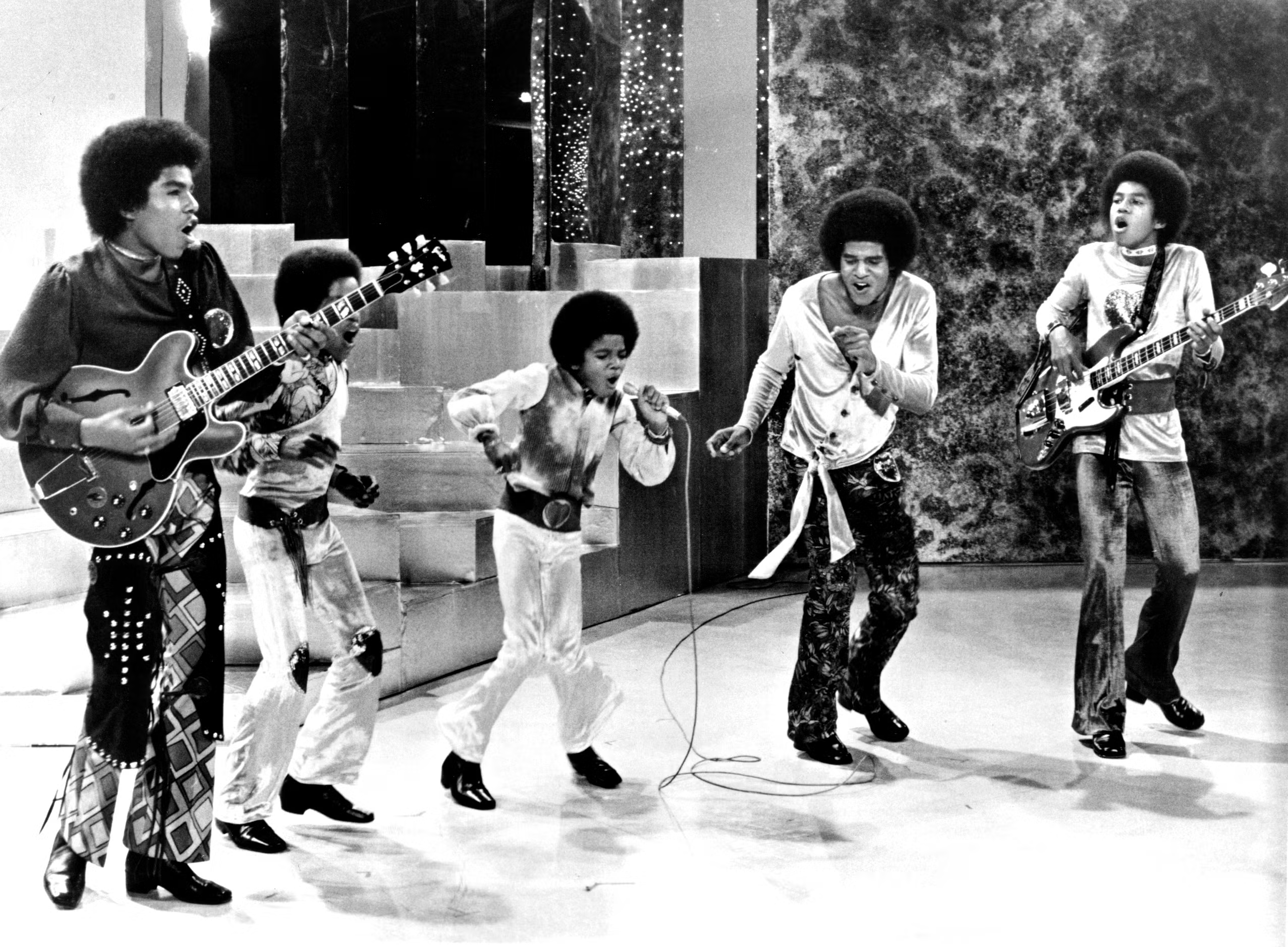
Jackson y sus hermanos pasaron horas interminables ensayando y perfeccionando su actuación. Al principio, los Jackson 5 tocaron en conciertos locales y construyeron un fuerte seguimiento. Grabaron un sencillo por su cuenta, “Big Boy”, con la cara B “You’ve Changed”, pero el disco no generó mucho interés. El grupo pasó a abrir para artistas de R&B como Gladys Knight and the Pips, James Brown y Sam and Dave. Muchos de estos intérpretes estaban firmados con el legendario sello discográfico Motown, y los Jackson 5 finalmente llamaron la atención del fundador de Motown, Berry Gordy.
Impresionado por el grupo, Gordy firmó al grupo con su sello a principios de 1969. Jackson y sus hermanos se mudaron a Los Ángeles, donde vivieron con Gordy y Diana Ross de las Supremes mientras se establecían. Los Jackson 5 hicieron su primera aparición en televisión durante el certamen de Miss Black American de 1969, interpretando una versión de “It’s Your Thing.” Su primer álbum, Diana Ross Presents the Jackson 5, llegó a las listas en diciembre de 1969, y el sencillo “I Want You Back” alcanzó el número 1 en el Billboard Hot 100 poco después.
Más sencillos que alcanzaron las listas rápidamente siguieron, como “ABC”, “The Love You Save” y “I’ll Be There.” Durante varios años, Jackson y los Jackson 5 mantuvieron un apretado calendario de giras y grabaciones bajo la supervisión de Gordy y su personal de Motown. El grupo se volvió tan popular que incluso tuvo su propio programa de dibujos animados homónimo, que se emitió de 1971 a 1972. Jackson también popularizó el “baile robot” después de usar el movimiento durante una actuación de 1973 de la canción “Dancing Machine” en The Mike Douglas Show.
A pesar del gran éxito del grupo, había problemas en el trasfondo. Las tensiones aumentaron entre Gordy y Joseph sobre la gestión de las carreras de sus hijos, con los Jackson queriendo más control creativo sobre su material. El grupo rompió oficialmente lazos con Motown en 1976, aunque Jermaine permaneció con el sello para seguir su carrera en solitario. Ahora llamándose a sí mismos los Jacksons, el grupo firmó un nuevo contrato de grabación con Epic Records. Para el lanzamiento de su tercer álbum para el sello, Destiny (1978), los hermanos habían emergido como talentosos compositores.
Carrera en solitario
Jackson comenzó su carrera en solitario mientras actuaba simultáneamente con los Jackson 5. Lanzó su álbum debut en solitario, Got to Be There (1971), a los 13 años, y la canción principal llegó a las listas. Tuvo su primer sencillo número 1 en solitario con la canción principal de su segundo álbum Ben (1972), que grabó para la película de 1972 del mismo nombre sobre una rata asesina. Jackson siguió esos álbumes con Music and Me (1973) y Forever, Michael (1975), este último fue su último álbum con Motown Records.
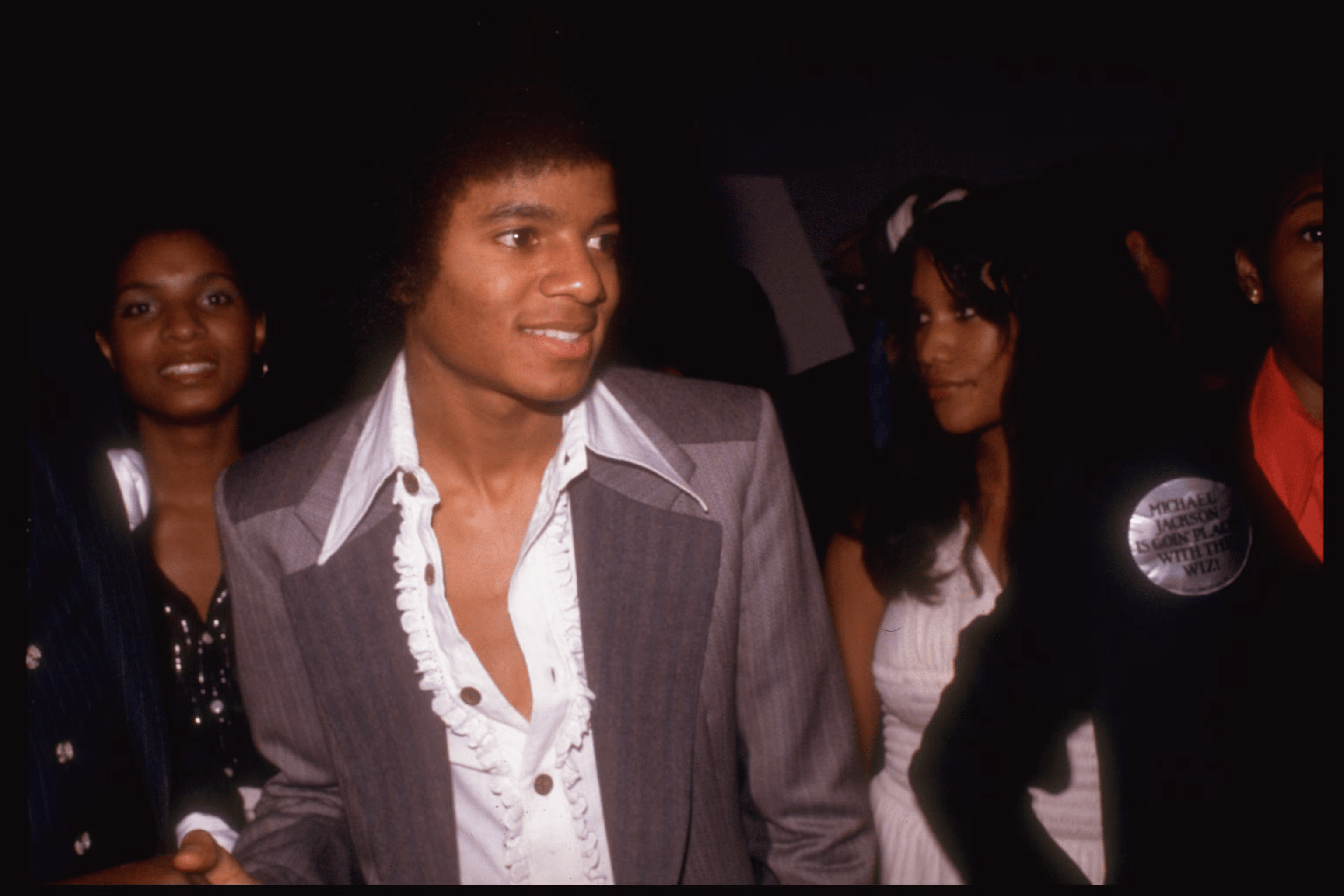
A medida que la fama de Jackson aumentaba, intentó actuar, y la experiencia también dejó su huella en su música. Jackson interpretó al Espantapájaros en la película The Wiz (1977), dirigida por Sidney Lumet, protagonizando junto a Diana Ross y Nipsey Russell. Mientras vivía en la ciudad de Nueva York para hacer la película, Jackson visitaba frecuentemente el club nocturno Studio 54 y fue expuesto a la música hip-hop temprana, que influyó en su beatboxing en canciones como “Working Night and Day.”
Jackson logró su gran avance en su carrera en solitario con Off the Wall (1979), su primer álbum con Epic Records y su primero producido por Quincy Jones, a quien conoció mientras trabajaba en The Wiz. Una mezcla contagiosa de pop y funk, Off the Wall presentó el sencillo ganador del Grammy “Don’t Stop ’Til You Get Enough,” junto con éxitos como “Rock with You,” “She’s Out of My Life,” y la canción principal. Los críticos sintieron que el álbum movió a Jackson del pop de su juventud a un sonido más complejo, y algunos lo han llamado uno de los mejores álbumes pop jamás creados.
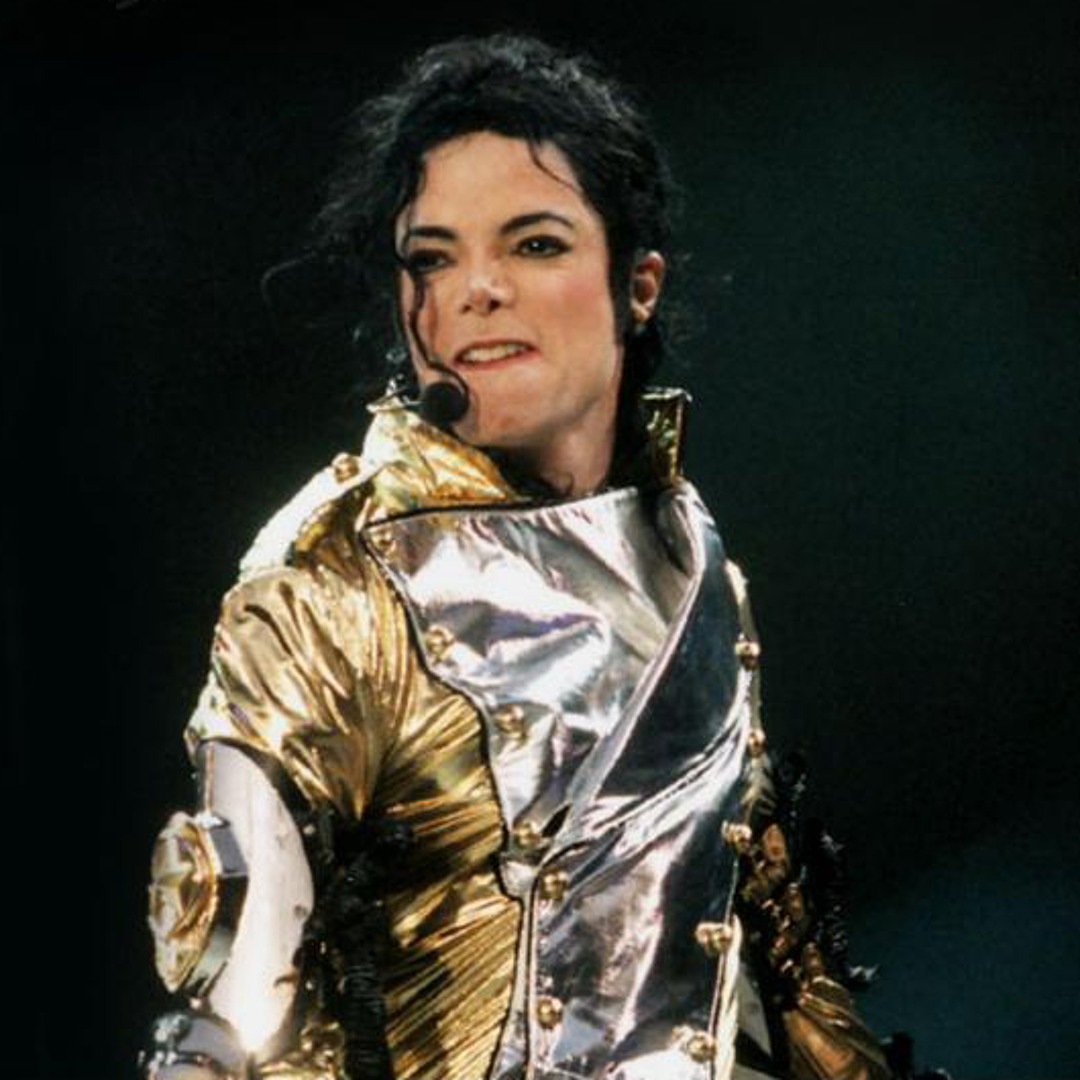
Jackson todavía estaba actuando con sus hermanos en este momento, y la respuesta abrumadoramente positiva a Off the Wall ayudó a los Jackson como grupo. Su álbum Triumph (1980) vendió más de 1 millón de copias, y los hermanos realizaron una extensa gira para apoyar la grabación. Al mismo tiempo, Jackson continuó explorando más formas de expandirse por su cuenta. En 1983, Jackson emprendió su última gira con sus hermanos para apoyar el álbum Victory (1984). El dúo de Jackson con Mick Jagger, llamado “State of Shock” fue el sencillo más exitoso del álbum.
Éxito global con Thriller
Jackson logró un éxito sin precedentes con el lanzamiento de su sexto álbum en solitario, Thriller (1982), que, a partir de agosto de 2021, todavía era reconocido por Guinness World Records como el álbum más vendido de todos los tiempos, habiendo vendido 67 millones de copias en todo el mundo y 34 millones solo en Estados Unidos. El álbum permaneció en las listas durante 80 semanas después de su lanzamiento, manteniendo el puesto número 1 durante 37 semanas, y generó siete éxitos en el Top 10, incluidos “Thriller,” “Billie Jean,” “Beat It,” “Human Nature,” “Wanna Be Startin’ Somethin’,” y “P.Y.T. (Pretty Young Thing).”
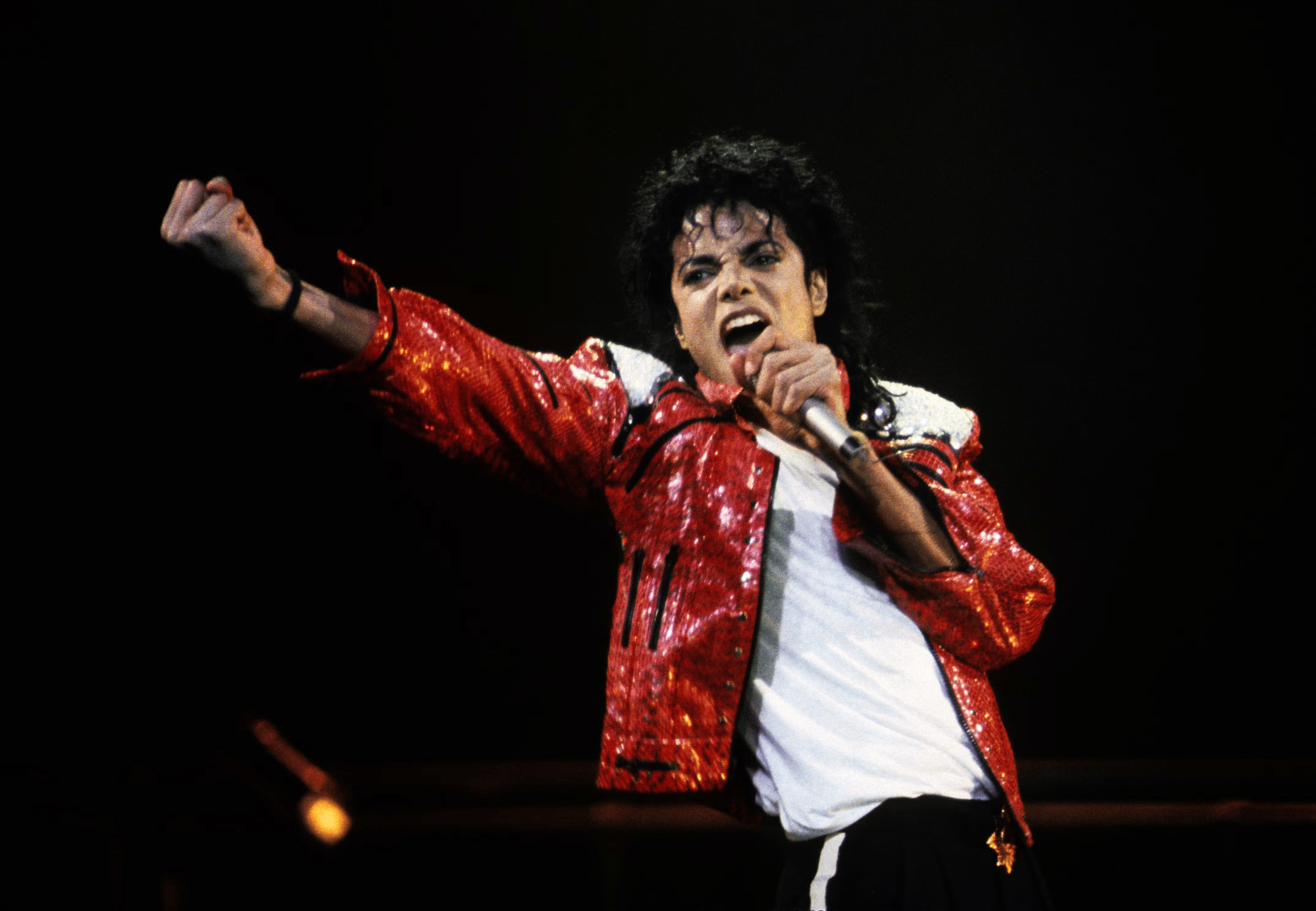
El álbum obtuvo 12 nominaciones a los premios Grammy y ganó ocho, ambos récords en ese momento. Jackson también filmó un elaborado video musical para la canción principal del álbum. Dirigido por el cineasta John Landis, el mini-película de 14 minutos “Thriller” presenta una trama de terror que culmina con Jackson bailando con docenas de zombis en una calle de ciudad abandonada. Tras su debut en MTV el 2 de diciembre de 1983, fue aclamado como uno de los mejores videos musicales de todos los tiempos y se convirtió en el primer video musical en ser seleccionado para el Registro Nacional de Cine en 2009.
En un especial de televisión de 1983 que honraba a Motown, Jackson interpretó su éxito número 1 “Billie Jean” y debutó el moonwalk, que se convirtió en uno de sus movimientos característicos. El paso de baile, que el músico de R&B Jeffrey Daniel le había enseñado tres años antes, implica que el bailarín se desliza hacia atrás a pesar de las acciones corporales que sugieren movimiento hacia adelante. La actuación de baile muy aclamada impulsó aún más las ventas del ya exitoso álbum Thriller. The New York Times aclamó a Jackson como un “fenómeno musical”, escribiendo: “En el mundo de la música pop, está Michael Jackson y están todos los demás.”
Accidente en el comercial de Pepsi
Jackson firmó un contrato promocional récord de $5 millones con PepsiCo en noviembre de 1983, lanzando la campaña New Generation dirigida a la juventud de la marca. Sin embargo, mientras filmaba un comercial de Pepsi el enero siguiente, los fuegos artificiales encendieron accidentalmente su cabello, resultando en quemaduras de segundo y tercer grado en su cuero cabelludo.
Jackson se sometió a una cirugía para reparar sus lesiones y se cree que comenzó a experimentar con cirugía plástica en ese momento. Su rostro, especialmente su nariz, se alteraría drásticamente en los años siguientes. Jackson finalmente presentó una demanda contra Pepsi y llegó a un acuerdo por $1.5 millones.
La cima de la fama
En 1985, Jackson mostró su lado altruista al trabajar con Lionel Richie para coescribir “We Are the World”, un sencillo benéfico para la organización sin fines de lucro USA for Africa. Una verdadera lista de estrellas musicales participó en el proyecto, incluidos Ray Charles, Bob Dylan, Willie Nelson, Bruce Springsteen y Tina Turner. Se convirtió en uno de los sencillos más vendidos de todos los tiempos y, según algunos informes, recaudó más de $75 millones para ayuda humanitaria para combatir la pobreza en África.
Cinco años después de Thriller, Jackson lanzó su muy esperado álbum de seguimiento Bad (1987). Aunque no pudo duplicar las ventas fenomenales de Thriller, Bad aún alcanzó la cima de las listas y se convirtió en el primer álbum en presentar cinco éxitos número 1 con “I Just Can’t Stop Loving You,” “Bad,” “The Way You Make Me Feel,” “Man in the Mirror,” y “Dirty Diana.” El cineasta Martin Scorsese dirigió el video musical de la canción principal, que presentaba a un Wesley Snipes entonces desconocido e involucraba una historia elaborada sobre adolescentes delincuentes y violencia de pandillas. Jackson pasó más de un año en la carretera, dando conciertos para promover el álbum.
Moonwalk: Una memoria
En 1988, Jackson compró 2,700 acres de propiedad en Los Olivos, California, por $17 millones y lo convirtió en Neverland Ranch, un hogar y parque de atracciones privado que poseyó hasta 2005. Nombrado así por la isla de fantasía de la historia de Peter Pan, incluía un zoológico, tren, noria y un cine de 50 asientos. Se mantenían varios animales exóticos en el rancho, incluido el famoso chimpancé mascota de Jackson, Bubbles.
Alrededor de finales de la década de 1980, comenzaron a circular rumores de que Jackson estaba aclarando el color de su piel para parecer más blanco y durmiendo en una cámara de oxígeno especial para aumentar su esperanza de vida. En 1993, Jackson accedió a una rara entrevista televisiva con Oprah Winfrey para calmar rumores. Explicó que el cambio en el tono de su piel era el resultado de una condición de piel conocida como vitiligo, y se abrió sobre el abuso que sufrió de su padre.
Éxito continuo con Dangerous
En 1991, Jackson lanzó su octavo álbum en solitario Dangerous, el primero sin Quincy Jones en 16 años. El álbum marcó una dirección diferente para Jackson y mezcló varios géneros, incluidos R&B, funk, gospel, hip-hop, rock, industrial y clásico. Incluyó el sencillo exitoso “Black or White,” con un video musical acompañante dirigido por Landis y que presentaba una aparición especial del niño estrella Macaulay Culkin. Los últimos minutos del video presentaban a Jackson haciendo gestos sexuales y dañando violentamente coches y edificios, lo que atrajo críticas de algunos espectadores. Jackson emitió una disculpa y editó el video para eliminar estos elementos.
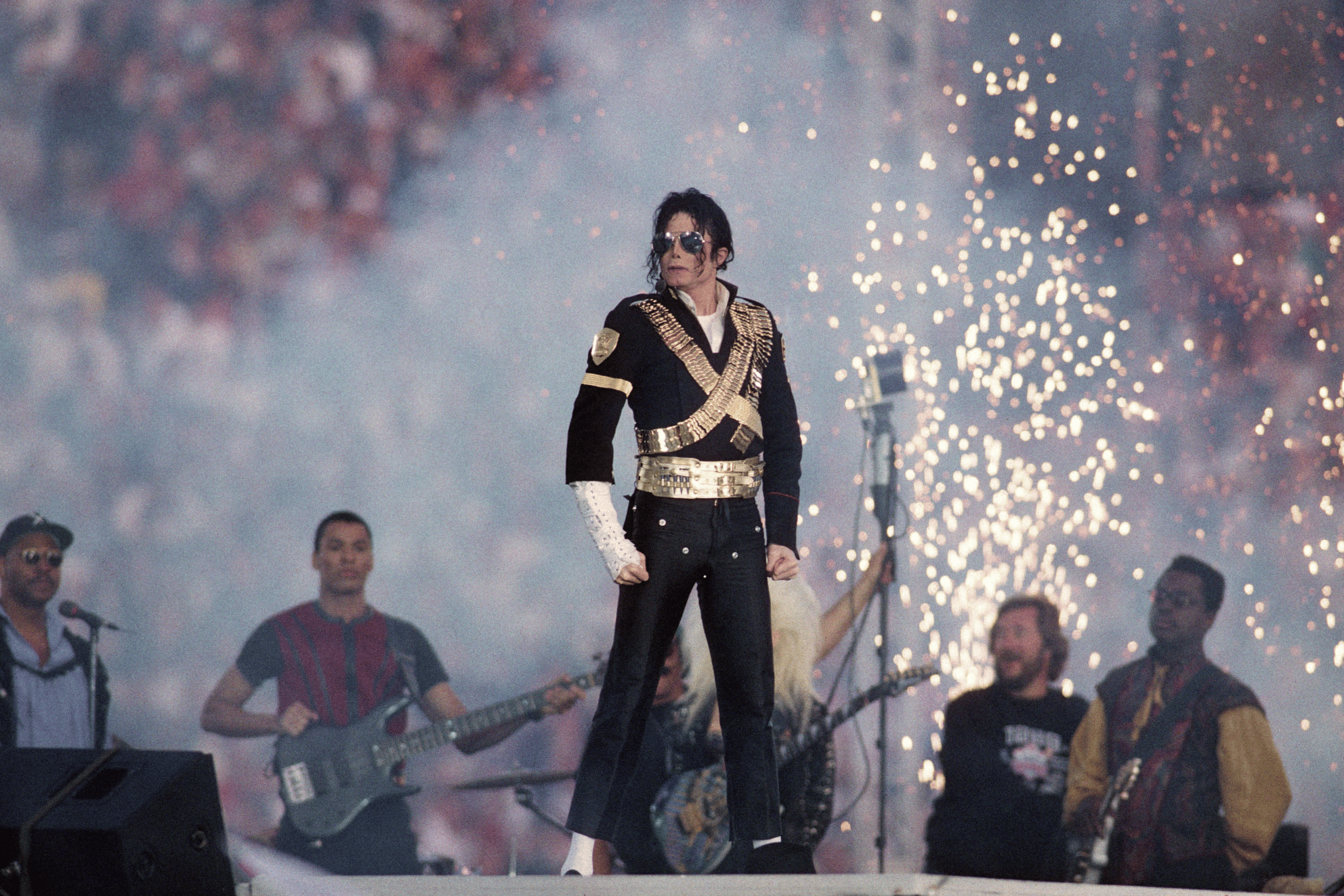
La música de Jackson continuó disfrutando de una amplia popularidad en los años siguientes. En 1993, actuó en varios eventos importantes, incluido el espectáculo de medio tiempo del Superbowl XXVII. Sin embargo, 1993 también vio la primera de varias acusaciones de abuso infantil contra Jackson, cuando un niño de 13 años afirmó que la estrella de la música lo había manoseado. Se sabía que Jackson tenía noches de pijama con niños en su Neverland Ranch, pero esta fue la primera acusación pública de mala conducta.
Declive de la carrera
Michael Jackson enfrentó muchas controversias en su vida, incluido un juicio penal en 2005 en el que fue absuelto de todos los cargos.
La carrera musical de Jackson comenzó a declinar con la tibia recepción de HIStory: Past, Present, and Future, Book I (1995). El álbum de dos discos presentaba una recopilación de grandes éxitos en el primer disco y material nuevo en el segundo, incluidas colaboraciones con Janet Jackson, The Notorious B.I.G., Shaquille O’Neal y Slash. HIStory fue considerado el álbum más personal de Jackson, con letras relacionadas con sus acusaciones de abuso infantil y la ira por su tratamiento por parte de los medios. El disco generó dos éxitos, “You Are Not Alone” y su dúo con su hermana Janet, “Scream.” El video temático de la nave espacial para la última canción costó un récord de $7 millones para producir y ganó un premio Grammy por sus efectos pulidos. Otra pista del álbum, “They Don’t Care About Us,” trajo a Jackson intensas críticas por usar un término antisemita.
En 2001, Jackson lanzó Invincible, su último álbum de estudio antes de su muerte. Costó $30 millones producir, lo que lo convirtió en el álbum más caro jamás hecho. El álbum tocó temas como la soledad, problemas sociales y las objeciones continuas de Jackson a los medios. A pesar de debutar en el número 1 en las listas de Billboard, recibió críticas mixtas de los críticos. Invincible fue lanzado mientras Jackson tenía problemas legales con Sony sobre los derechos de sus grabaciones maestras, que se intensificaron cuando Jackson llamó al presidente de Sony Music, Tommy Mottola, un racista que explota a los artistas negros.
A principios del siglo XXI, Jackson era cada vez más conocido por sus excentricidades, incluido el uso de una máscara quirúrgica en público. En 2002, Jackson hizo titulares cuando parecía confundido y desorientado en el escenario en los MTV Video Music Awards. En 2002, enfrentó críticas generalizadas por colgar a su bebé, Blanket, sobre un balcón mientras saludaba a los fans en Berlín, Alemania. En una entrevista posterior, Jackson explicó: “Estábamos esperando a miles de fans abajo, y estaban gritando que querían ver a mi hijo, así que fui lo suficientemente amable como para dejarlos ver. Estaba haciendo algo por inocencia.”
Acusaciones de abuso
En 1993, el niño de 13 años Jordan Chandler acusó a Jackson de batería sexual. En este punto, ya era bien conocido que la estrella de la música tenía noches de pijama con niños en su Neverland Ranch. Después de que se hizo la acusación, la policía registró el rancho, pero dijo que no encontraron evidencia que respaldara la afirmación. Al año siguiente, Jackson resolvió el caso fuera de los tribunales con la familia del niño.
En el documental de televisión de 2003 Living with Michael Jackson, el periodista británico Martin Bashir pasó varios meses con el cantante, incluso logrando que hablara sobre sus relaciones con los niños. Jackson admitió que continuaba teniendo niños durmiendo en su rancho, incluso después de las acusaciones de 1993 y que a veces dormía con los niños en su cama. “¿Por qué no puedes compartir tu cama? Eso es lo más amoroso que puedes hacer, compartir tu cama con alguien,” le dijo Jackson a Bashir.
Jackson encontró más problemas legales en 2003 cuando fue arrestado por cargos relacionados con incidentes con un niño de 13 años. En total enfrentó 10 cargos, incluidos conducta lasciva con un menor, conspiración para cometer secuestro infantil, encarcelamiento falso y extorsión. El juicio resultante de 2005 fue un circo mediático, con fans, detractores y equipos de cámaras rodeando el tribunal. Más de 130 personas testificaron, y el acusador de Jackson describió a través de un video cómo le habían dado vino y lo habían molestado. Sin embargo, el jurado encontró problemas con su testimonio y el testimonio de su madre. Jackson fue declarado no culpable de todos los cargos en junio de 2005.
Las acusaciones de abuso sexual contra Jackson resurgieron a principios de 2019 con la emisión de Leaving Neverland en el Festival de Cine de Sundance, seguido de una transmisión por HBO. El documental de cuatro horas exploró los recuerdos de dos hombres que describen cómo la estrella del pop los atrajo a su órbita cuando eran niños, ganando la confianza de sus padres, antes de coaccionarlos a actividades sexuales en habitaciones de hotel y en su Neverland Ranch. La herencia de Jackson llamó a los dos acusadores “perjuradores en serie” y presentó una demanda de $100 millones contra HBO. El caso fue enviado a arbitraje en diciembre de 2020.
Matrimonios e hijos
En agosto de 1994, Jackson anunció que se había casado con Lisa Marie Presley, hija de la leyenda del rock Elvis Presley. La unión resultó ser de corta duración, ya que se divorciaron en 1996. Algunos pensaron que el matrimonio era una maniobra publicitaria para restaurar la imagen de Jackson después de las acusaciones de abuso infantil.
Historia relacionada
Más tarde, en 1996, Jackson se casó con la enfermera Debbie Rowe. Jackson y Rowe tuvieron dos hijos a través de inseminación artificial: el hijo Michael Joseph Jackson Jr., nacido en 1997 y conocido como Prince Jackson, y la hija Paris Michael Katherine Jackson, nacida en 1998. Cuando Rowe y Jackson se divorciaron en 1999, Michael recibió la custodia total de sus dos hijos. Jackson tendría un tercer hijo, Prince Michael Jackson II, que se hacía llamar “Blanket” y ahora “Bigi”, con una madre sustituta desconocida en 2002.
Causa de muerte de Michael Jackson
Jackson murió el 25 de junio de 2009, a la edad de 50 años, tras sufrir un paro cardíaco en su casa de Los Ángeles. Los intentos de reanimación fracasaron, y fue trasladado de urgencia al hospital, donde murió más tarde esa mañana. En febrero de 2010, un informe oficial del forense reveló que la causa de la muerte de Jackson fue intoxicación aguda por propofol, o una sobredosis letal de un cóctel de medicamentos recetados que incluía los sedantes midazolam, diazepam y lidocaína.
Ayudado por su médico personal, el Dr. Conrad Murray, Jackson había estado tomando medicamentos sedantes para ayudarlo a dormir por la noche. Murray le dijo a la policía que creía que Jackson había desarrollado una adicción particular al propofol, que Jackson se refería como su “leche.” Se informó que Murray administraba propofol por vía intravenosa por las noches, en dosis de 50 miligramos, y estaba intentando desintoxicar a la estrella del pop del medicamento alrededor del momento de su muerte.
Una investigación policial reveló que Murray no estaba autorizado para recetar la mayoría de los medicamentos controlados en el estado de California. Los pasos que tomó para salvar a Jackson también fueron objeto de escrutinio, ya que las pruebas mostraron que no se había cumplido el estándar de atención para administrar propofol, y el equipo recomendado para el monitoreo del paciente, dosificación precisa y resucitación no había estado presente. Como resultado, la muerte de Jackson fue declarada un homicidio. Murray fue condenado por homicidio involuntario en noviembre de 2011, recibiendo una sentencia máxima de cuatro años de prisión.
En 2013, la familia Jackson presentó una demanda por muerte injusta contra AEG Live, la compañía de entretenimiento que promovió la serie de regreso planeada de Jackson en 2009. Creían que la compañía no había protegido efectivamente al cantante mientras estaba bajo el cuidado de Murray. Los abogados de la familia Jackson buscaron hasta $1.5 mil millones—una estimación de lo que Jackson podría haber ganado hasta ese momento—pero en octubre de ese año, un jurado determinó que AEG no era responsable de la muerte del cantante.
Memoriales y legado
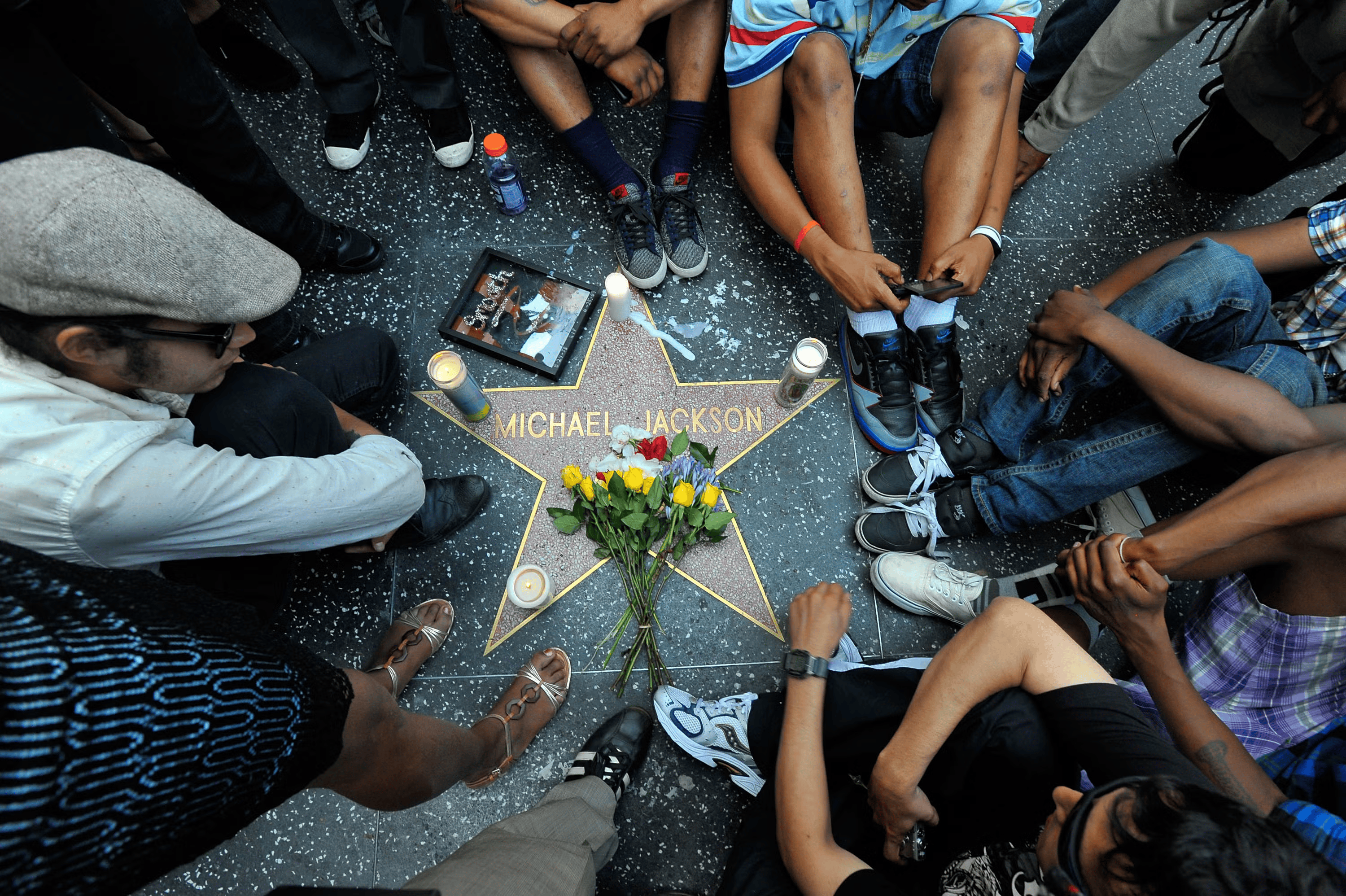
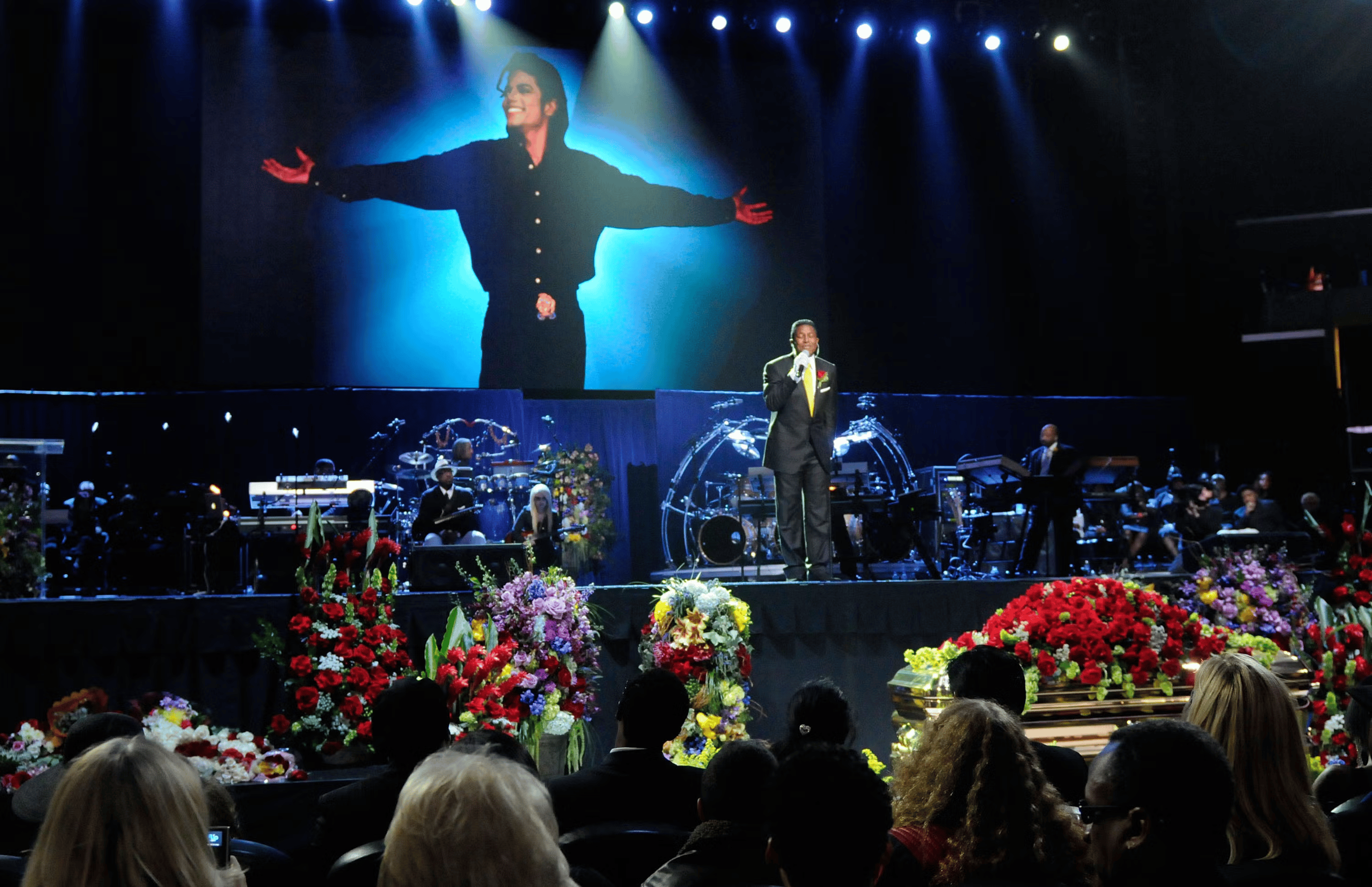
En julio de 2009, se celebró un memorial televisado para los fans de Jackson en el Staples Center en el centro de Los Ángeles. Mientras se emitieron 17,500 entradas gratuitas a los fans a través de una lotería, se estima que 1 mil millones de espectadores vieron el memorial por televisión o en línea. La muerte de Jackson resultó en una oleada de duelo y simpatía pública. Se erigieron memoriales en todo el mundo, incluido uno en la arena donde iba a actuar y otro en su hogar de infancia en Gary, Indiana. La familia Jackson celebró un funeral privado en septiembre en el Forest Lawn Memorial Park en Glendale, California, para miembros de la familia inmediata y 200 invitados.
A lo largo de su carrera, Jackson acumuló 38 nominaciones a los premios Grammy y 13 victorias, incluido Álbum del Año por Thriller, Grabación del Año por “Beat It,” Canción del Año por “We Are The World,” y su primer Grammy en 1980 por Mejor Interpretación Vocal Masculina de R&B en “Don’t Stop ’Til You Get Enough.” Entre sus otros premios y honores se encuentran el Premio Grammy Leyenda de 1993 y su inducción al Salón de la Fama del Rock & Roll en 2001.
Michael Jackson’s This Is It
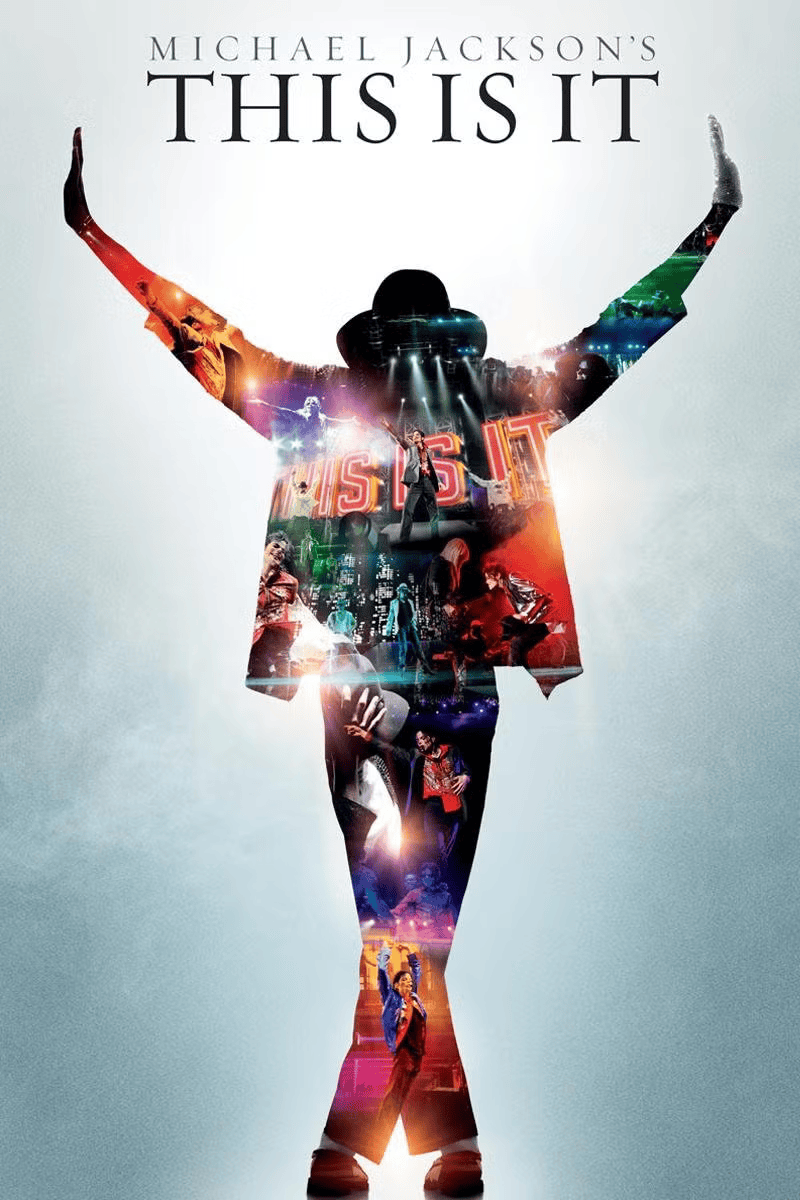
Un documental sobre los preparativos de Jackson para su última gira, titulado This Is It, fue lanzado en 2009. Además, se lanzaron varios álbumes póstumos en los años posteriores a la muerte de Jackson. El primero, Michael, fue lanzado en diciembre de 2010 en medio de controversia sobre si el cantante realmente interpretó algunas de las pistas, una afirmación que la herencia de Jackson luego refutó. El segundo, _Xscape (_2014), presentó al cantante de R&B Usher interpretando el sencillo “Love Never Felt So Good.”
Desde su muerte, Jackson ha sido perfilado en múltiples biografías e inspirado la creación de dos espectáculos de Cirque du Soleil. Fue honrado póstumamente con el Premio de Legado de la Fundación Elizabeth Taylor AIDS por Servicio Humanitario en 2018, con sus hijos, Paris y Prince, aceptando en su nombre.
La herencia de Michael Jackson
En el momento de su muerte, Jackson tenía alrededor de $500 millones en deudas, aunque esto se resolvió gracias a una inversión anterior. En 2016, la herencia de Jackson vendió su participación en Sony/ATV por $750 millones, y dos años después, la herencia recibió otros $287.5 millones por su participación en EMI Music Publishing. Además, el poder de ganancia de Jackson duró mucho más allá de sus últimos días. En octubre de 2017, Forbes anunció que Jackson había encabezado la lista de celebridades muertas que más ganan de la publicación durante el quinto año consecutivo, ganando $75 millones. A partir de enero de 2026, la herencia de Jackson está valorada en más de $2 mil millones.
Película sobre Michael
En abril de 2026, el temprano éxito de Jackson será cronicado en la película musical biográfica Michael. La fallecida estrella del pop será interpretada por su sobrino de 29 años, Jaafar Jackson, quien es hijo de Jermaine Jackson. Si bien la película originalmente presentaba escenas que abordaban las primeras acusaciones de abuso infantil en su contra, supuestamente pasó por $15 millones en regrabaciones para eliminar las escenas después de que su herencia encontró una cláusula en el acuerdo de su primer acusador, Jordan Chandler, que prohíbe la mención de su nombre en cualquier película sobre la estrella del pop.
Citas
- Estar en el escenario es magia. No hay nada como eso. Sientes la energía de todos los que están ahí fuera. Lo sientes por todo tu cuerpo.
- Ser un artista, simplemente no puedes decir quién es tu amigo.
- Ser acosado duele. Te sientes como espagueti entre miles de manos. Simplemente te están desgarrando y tirando de tu cabello. Y sientes que en cualquier momento vas a romperte.
- Odio llevar el crédito por las canciones que he escrito. Siento que en algún lugar, en algún momento, ya se ha hecho, y yo soy solo un mensajero llevándolo al mundo. Realmente creo eso. Me encanta lo que hago. Estoy feliz con lo que hago. Es una forma de escapismo.
- ¿Por qué no puedes compartir tu cama? Eso es lo más amoroso que puedes hacer, compartir tu cama con alguien.
- Si entras a este mundo sabiendo que eres amado y sales de este mundo sabiendo lo mismo, entonces todo lo que sucede en el medio se puede manejar.
- Siempre quiero saber qué hace que los buenos intérpretes se desmoronen.
- Mi padre ensayaba con un cinturón en la mano. No podías equivocarte.
- La magia es fácil si pones tu corazón en ello.
- No sería feliz haciendo solo un tipo de música o etiquetándonos. Me gusta hacer algo para todos... No me gusta que nuestra música sea etiquetada. Las etiquetas son como... racismo.
- Lo que estoy preguntando es si este sigue siendo un país donde una persona peculiar como Michael Jackson puede obtener un trato justo y ser considerado inocente hasta que se demuestre lo contrario... o si esto es solo un corral estadounidense del siglo XXI donde todos nos sentimos libres de atacar al gallo que camina sobre la luna... y picotearlo hasta matarlo.
 Michael Jackson: a short bio
Known as the “King of Pop,” Michael Jackson was a best-selling American singer, songwriter, and dancer. As a child, Jackson became the lead singer of his family’s popular Motown group, the Jackson 5. He went on to a solo career of astonishing worldwide success, delivering No. 1 hits from the albums Off the Wall, Thriller, and Bad. Thriller remains one of the best-selling albums of all time. In his later years, Jackson was dogged by allegations of child molestation. The 13-time Grammy Award winner died in 2009 at age 50 of a drug overdose just before launching a comeback tour.
Early Life and Family
Michael Joseph Jackson was born on August 29, 1958, in Gary, Indiana. He was the eighth of 10 children born to Joseph Jackson, a crane operator, and Katherine Jackson, a homemaker and a devout Jehovah’s Witness. Both of Jackson’s parents had musical aspirations: Katherine played clarinet and piano and aspired to be a country singer, while Joseph was a guitarist who performed in local R&B bands. They encouraged their children to pursue musical ambitions, and Jackson’s career began at age 5 under his father’s guidance.
Almost all of Jackson’s siblings made marks in the music industry, including Rebbie, Jackie, Tito, Jermaine, La Toya, Marlon, Randy, and Janet Jackson. (His brother Brandon, Marlon’s twin, died shortly after birth.) Joseph pushed his children hard to succeed, making them rehearse five hours a day after school, and was reportedly known to become violent with them. He was said to beat them with a belt buckle or electric kettle cord and to order them to break a branch off a tree if they got a dance step wrong, so he could hit them with it.
The Jackson 5
Joseph moulded his sons into a musical group in the early 1960s that would later become known as the Jackson 5. At first, the Jackson Family group consisted of Jackson’s older brothers Tito, Jermaine, and Jackie. Jackson joined his siblings at 5 years old and emerged as the group’s lead vocalist. He showed remarkable range and depth for such a young performer, impressing audiences with his ability to convey complex emotions. They officially became the Jackson 5 when their older brother, Marlon, joined the group.
Jackson and his brothers spent endless hours rehearsing and polishing their act. At first, the Jackson 5 played local gigs and built a strong following. They recorded one single on their own, “Big Boy,” with the B-side “You’ve Changed,” but the record failed to generate much interest. The group moved on to opening for R&B artists such as Gladys Knight and the Pips, James Brown, and Sam and Dave. Many of these performers were signed to the legendary Motown record label, and the Jackson 5 eventually caught the attention of Motown founder Berry Gordy.
Impressed by the group, Gordy signed the group to his label in early 1969. Jackson and his brothers moved to Los Angeles, where they lived with Gordy and Diana Ross of the Supremes as they settled in. The Jackson 5 made its first television appearance during the 1969 Miss Black American Pageant, performing a cover of “It’s Your Thing.” Their first album, Diana Ross Presents the Jackson 5, hit the charts in December 1969, and the single “I Want You Back” reached No. 1 on the Billboard Hot 100 shortly afterwards.
More chart-topping singles quickly followed, such as “ABC,” “The Love You Save,” and “I’ll Be There.” For several years, Jackson and the Jackson 5 maintained a busy tour and recording schedule under the supervision of Gordy and his Motown staff. The group became so popular that it even had its own self-titled cartoon show, which ran from 1971 to 1972. Jackson also popularised the “robot dance” after using the move during a 1973 performance of the song “Dancing Machine” on The Mike Douglas Show.
Despite the group’s great success, there was trouble brewing behind the scenes. Tensions mounted between Gordy and Joseph over the management of his children’s careers, with the Jacksons wanting more creative control over their material. The group officially severed ties with Motown in 1976, though Jermaine remained with the label to pursue his solo career. Now calling themselves the Jacksons, the group signed a new recording deal with Epic Records. By the release of its third album for the label, Destiny (1978), the brothers had emerged as talented songwriters.
Solo Career
Jackson began his solo career while simultaneously performing with the Jackson 5. He released his debut solo album, Got to Be There (1971), at age 13, and the title track reached the charts. He had his first solo No. 1 single with the title track from his sophomore album Ben (1972), which he recorded for the 1972 film of the same name about a killer rat. Jackson followed those albums with Music and Me (1973) and Forever, Michael (1975), the latter of which was his last album with Motown Records.
As Jackson’s stardom rose, he tried his hand at acting, and the experience left its mark on his music, too. Jackson portrayed the Scarecrow in the Sidney Lumet–directed film The Wiz (1977), starring alongside Diana Ross and Nipsey Russell. While living in New York City to make the film, Jackson frequently visited the Studio 54 nightclub and was exposed to early hip-hop music, which influenced his beatboxing on songs like “Working Night and Day.”
Jackson achieved his solo career breakthrough with Off the Wall (1979), his first album with Epic Records and his first produced by Quincy Jones, whom he met while working on The Wiz. An infectious blend of pop and funk, Off the Wall featured the Grammy Award–winning single “Don’t Stop ’Til You Get Enough,” along with such hits as “Rock with You,” “She’s Out of My Life,” and the title track. Critics felt the album moved Jackson from the pop music of his youth into a more complex sound, and some have called it one of the best pop albums ever made.
Jackson was still performing with his brothers at this time, and the overwhelmingly positive response to Off the Wall helped the Jacksons as a group. Their album Triumph (1980) sold more than 1 million copies, and the brothers went on an extensive tour to support the recording. At the same time, Jackson continued exploring more ways to branch out on his own. In 1983, Jackson embarked on his final tour with his brothers to support the album Victory (1984). Jackson’s duet with Mick Jagger, called “State of Shock” was the most successful single from the album.
Global Success with Thriller
Jackson achieved unparalleled success with the release of his sixth solo album, Thriller (1982), which, as of August 2021, was still recognised by Guinness World Records as the best-selling album of all time, having sold 67 million copies worldwide and 34 million in the United States alone. The album stayed on the charts for 80 weeks after its release, holding the No. 1 spot for 37 weeks, and generated seven Top 10 hits, including “Thriller,” “Billie Jean,” “Beat It,” “Human Nature,” “Wanna Be Startin’ Somethin’,” and “P.Y.T. (Pretty Young Thing).”
The album garnered 12 Grammy Award nominations and won eight, both records at the time. Jackson also filmed an elaborate music video for the album’s title track. Directed by filmmaker John Landis, the 14-minute “Thriller” mini-movie features a horror plot that culminates with Jackson dancing with dozens of zombies in an abandoned city street. Following its debut on MTV on December 2, 1983, it was hailed as one of the greatest music videos of all time and became the first music video to be selected for the National Film Registry in 2009.
On a 1983 television special honouring Motown, Jackson performed his No. 1 hit “Billie Jean” and debuted the moonwalk, which became one of his signature moves. The dance step, which R&B musician Jeffrey Daniel had taught him three years earlier, involves the dancer gliding backwards despite bodily actions that suggest forward motion. The much-lauded dance performance further boosted sales for the already successful Thriller album. The New York Times hailed Jackson as a “musical phenomenon,” writing: “In the world of pop music, there is Michael Jackson and there is everybody else.”
Pepsi Commercial Accident
Jackson signed a record-breaking $5 million promotional deal with PepsiCo in November 1983, launching the brand’s youth-targeted New Generation campaign. While filming a Pepsi commercial the following January, however, pyrotechnics accidentally set his hair on fire, resulting in second- and third-degree burns on his scalp.
Jackson had surgery to repair his injuries and is believed to have begun experimenting with plastic surgery around this time. His face, especially his nose, would become dramatically altered in the coming years. Jackson eventually filed a lawsuit against Pepsi and reached a settlement for $1.5 million.
The Height of Stardom
In 1985, Jackson showed his altruistic side by working with Lionel Richie to co-write “We Are the World,” a charity single for the non-profit organisation USA for Africa. A veritable who’s who of music stars participated in the project, including Ray Charles, Bob Dylan, Willie Nelson, Bruce Springsteen, and Tina Turner. It became one of the top-selling singles of all time and, by some accounts, raised more than $75 million for humanitarian aid to fight poverty in Africa.
Five years after Thriller, Jackson released his highly anticipated follow-up album Bad (1987). Although unable to duplicate the phenomenal sales of Thriller, Bad still reached the top of the charts and became the first album to feature five No. 1 hits with “I Just Can’t Stop Loving You,” “Bad,” “The Way You Make Me Feel,” “Man in the Mirror,” and “Dirty Diana.” Filmmaker Martin Scorsese directed the title track’s music video, which featured a then-unknown Wesley Snipes and involved an elaborate story about delinquent teenagers and gang violence. Jackson spent more than a year on the road, playing concerts to promote the album.
Moonwalk: A Memoir
In 1988, Jackson bought 2,700 acres of property in Los Olivos, California, for $17 million and converted it into Neverland Ranch, a home and private amusement park he owned until 2005. Named after the fantasy island from the Peter Pan story, it included a zoo, train, Ferris wheel, and 50-seat movie theatre. Several exotic pets were kept at the ranch, including Jackson’s famous pet chimpanzee Bubbles.
Around the late 1980s, rumors began swirling that Jackson was lightening the color of his skin to appear more white and sleeping in a special oxygen chamber to increase his lifespan. In 1993, Jackson agreed to a rare television interview with Oprah Winfrey to quell rumors. He explained that the change in his skin tone was the result of a skin condition known as vitiligo, and he opened up about the abuse he suffered from his father.
Continued Success with Dangerous
In 1991, Jackson released his eighth solo album Dangerous, his first without Quincy Jones in 16 years. The album marked a different direction for Jackson and mixed various genres, including R&B, funk, gospel, hip-hop, rock, industrial, and classical. It included the hit single “Black or White,” with an accompanying music video directed by Landis and featuring a cameo appearance by child star Macaulay Culkin. The final minutes of the video featured Jackson making sexual gesturing and violently damaging cars and buildings, which drew criticism from some viewers. Jackson issued an apology and edited the video to remove these elements.
Jackson’s music continued to enjoy widespread popularity in the years that followed. In 1993, he performed at several important events, including the halftime show of Superbowl XXVII. However, 1993 also saw the first of several child molestation allegations against Jackson, when a 13-year-old boy claimed that the music star had fondled him. Jackson was known to have sleepovers with boys at his Neverland Ranch, but this was the first public charge of wrongdoing.
Career Decline
Michael Jackson faced many controversies in his life, including a 2005 criminal trial in which he was acquitted of all charges.
Jackson’s musical career began to decline with the lukewarm reception to HIStory: Past, Present, and Future, Book I (1995). The two-disc album featured a greatest hits compilation on disc one and new material on disc two, including collaborations with Janet Jackson, The Notorious B.I.G., Shaquille O’Neal, and Slash. HIStory was considered Jackson’s most personal album, with lyrics pertaining to his child abuse allegations and anger of his treatment by the media. The record spawned two hits, “You Are Not Alone” and his duet with sister Janet, “Scream.” The spaceship-themed video for the latter song cost a record-setting $7 million to produce and earned a Grammy Award for its slick effects. Another track from the album, “They Don’t Care About Us,” brought Jackson intense criticism for using an anti-Semitic term.
In 2001, Jackson released Invincible, his final studio album prior to his death. It cost $30 million to produce, making it the most expensive album ever made. The album touched on topics such as isolation, social issues, and Jackson’s ongoing objections to the media. Despite debuting at No. 1 on the Billboard charts, it received mixed reviews from critics. Invincible was released as Jackson was having legal issues with Sony over the rights to his master recordings, which escalated when Jackson called Sony Music Chairman Tommy Mottola a racist who exploits Black artists.
By the turn of the century, Jackson was increasingly known for his eccentricities, including wearing a surgical mask in public. In 2002, Jackson made headlines when he seemed confused and disoriented on stage at the MTV Video Music Awards. In 2002, he faced widespread criticism for dangling his baby son, Blanket, over a balcony while greeting fans in Berlin, Germany. In a later interview, Jackson explained: “We were waiting for thousands of fans down below, and they were chanting they wanted to see my child, so I was kind enough to let them see. I was doing something out of innocence.”
Abuse Allegations
In 1993, 13-year-old Jordan Chandler accused Jackson of sexual battery. At this point, it was already well known music star had sleepovers with boys at his Neverland Ranch. After the allegation was made, the police searched the ranch, but said they found no evidence to support the claim. The following year, Jackson settled the case out of court with the boy’s family.
In the 2003 television documentary Living with Michael Jackson, British journalist Martin Bashir spent several months with the singer, even getting him to discuss his relationships with children. Jackson admitted that he continued to have children sleep over at his ranch, even after the 1993 allegations and that sometimes he slept with the children in his bed. “Why can’t you share your bed? That’s the most loving thing to do, to share your bed with someone,” Jackson told Bashir.
Jackson encountered more legal woes in 2003 when he was arrested on charges related to incidents with a 13-year-old boy. He faced 10 counts in total, including lewd conduct with a minor, conspiracy to commit child abduction, false imprisonment, and extortion. The resulting 2005 trial was a media circus, with fans, detractors and camera crews surrounding the courthouse. More than 130 people testified, and Jackson’s accuser described via videotape how he had been given wine and molested. However, the jury found problems with his testimony and his mother's testimony. Jackson was found not guilty of all charges in June 2005.
Accusations of sexual abuse against Jackson resurfaced in early 2019 with the airing of Leaving Neverland at the Sundance Film Festival, followed by an HBO broadcast. The four-hour documentary explored the recollections of two men who describe how the pop star lured them into his orbit when they were boys, gaining the trust of their parents, before coercing them into sexual activities in hotel rooms and at his Neverland Ranch. The Jackson estate called the two accusers “serial perjurers” and launched a $100 million lawsuit against HBO. The case was sent into arbitration in December 2020.
Marriages and Children
In August 1994, Jackson announced that he had married Lisa Marie Presley, daughter of rock icon Elvis Presley. The union proved to be short-lived, as they divorced in 1996. Some thought that the marriage was a publicity ploy to restore Jackson’s image after child molestation allegations.
Related Story
Later in 1996, Jackson wed nurse Debbie Rowe. Jackson and Rowe had two children through artificial insemination: son Michael Joseph Jackson Jr., born in 1997 and known as Prince Jackson, and daughter Paris Michael Katherine Jackson, born in 1998. When Rowe and Jackson divorced in 1999, Michael received full custody of their two children. Jackson would go on to have a third child, Prince Michael Jackson II who went by “Blanket” and now “Bigi,” with an unknown surrogate in 2002.
Michael Jackson’s Cause of Death
Jackson died on June 25, 2009, at the age of 50, after suffering a cardiac arrest in his Los Angeles home. CPR attempts failed, and he was rushed to the hospital, where he died later that morning. In February 2010, an official coroner’s report revealed Jackson’s cause of death was acute propofol intoxication, or a lethal overdose on a prescription drug cocktail including the sedatives midazolam, diazepam, and lidocaine.
Aided by his personal physician Dr. Conrad Murray, Jackson had been taking sedative drugs to help him sleep at night. Murray told police that he believed Jackson had developed a particular addiction to propofol, which Jackson referred to as his “milk.” Murray reportedly administered propofol by IV in the evenings, in 50-milligram dosages, and was attempting to wean the pop star off the drug around the time of his death.
A police investigation revealed that Murray was not licensed to prescribe most controlled drugs in the state of California. The steps he took to save Jackson also came under scrutiny, as evidence showed that the standard of care for administering propofol had not been met, and the recommended equipment for patient monitoring, precision dosing, and resuscitation had not been present. As a result, Jackson’s death was ruled a homicide. Murray was convicted of involuntary manslaughter on in November 2011, receiving a four-year maximum prison sentence.
In 2013, the Jackson family launched a wrongful death lawsuit against AEG Live, the entertainment company that promoted Jackson’s planned comeback series in 2009. They believed that the company had failed to effectively protect the singer while he was under Murray’s care. Jackson family lawyers sought up to $1.5 billion—an estimation of what Jackson could have earned to that point—but that October, a jury determined that AEG wasn’t responsible for the singer’s death.
Memorials and Legacy
In July 2009, a televised memorial was held for Jackson’s fans at the Staples Center in downtown Los Angeles. While 17,500 free tickets were issued to fans via lottery, an estimated 1 billion viewers watched the memorial on television or online. Jackson’s death resulted in an outpouring of public grief and sympathy. Memorials were erected around the world, including one at the arena where he was set to perform and another at his childhood home in Gary, Indiana. The Jackson family held a private funeral that September at the Forest Lawn Memorial Park in Glendale, California, for immediate family members and 200 guests.
Over the course of his career, Jackson had notched 38 Grammy Award nominations and 13 wins, including Album of the Year for Thriller, Record of the Year for “Beat It,” Song of the Year for “We Are The World,” and his first Grammy in 1980 for Best Male R&B Vocal Performance on “Don’t Stop ’Til You Get Enough.” Among his other awards and honors are the 1993 Grammy Legend Award, and his induction to the Rock & Roll Hall of Fame in 2001.
Michael Jackson’s This Is It
A documentary of Jackson’s preparations for his final tour, entitled This Is It, was released in 2009. In addition, a handful of posthumous albums were released in the years after Jackson’s death. The first, Michael, was released in December 2010 amid controversy over whether the singer actually performed some of the tracks, a claim the Jackson estate later refuted. The second, _Xscape (_2014), featured R&B singer Usher performing the single “Love Never Felt So Good.”
Since his death, Jackson has been profiled in multiple biographies and inspired the creation of two Cirque du Soleil shows. He was posthumously honoured with the 2018 Elizabeth Taylor AIDS Foundation Legacy Award for Humanitarian Service, with his children, Paris and Prince, accepting on his behalf.
Michael Jackson’s Estate
At the time of his death, Jackson was around $500 million in debt, though this was settled thanks to an earlier investment. In 2016, Jackson’s estate sold its share of Sony/ATV for $750 million, and two years later, the estate received another $287.5 million for its stake in EMI Music Publishing. Additionally, Jackson’s earning power lasted well past his final days. In October 2017, Forbes announced that Jackson had topped the publication’s list of top-earning dead celebrities for the fifth straight year, earning $75 million. As of January 2026, Jackson’s estate is valued at over $2 billion.
Michael Movie
In April 2026, Jackson’s early success will be chronicled in the musical biopic Michael. The late pop star will be portrayed by his 29-year-old nephew, Jaafar Jackson, who is the son of Jermaine Jackson. While the film originally featured scenes addressing the first child abuse allegations against him, it reportedly underwent $15 million in reshoots to scrub the scenes after his estate found a clause in the settlement of Jackson’s first accuser, Jordan Chandler, prohibiting the mention of his name in any movies about the pop star.
Quotes
- Being onstage is magic. There’s nothing like it. You feel the energy of everybody who’s out there. You feel it all over your body.
- Being an entertainer, you just can’t tell who is your friend.
- Being mobbed hurts. You feel like you’re spaghetti among thousands of hands. They’re just ripping you and pulling your hair. And you feel that any moment you’re gonna just break.
- I hate to take credit for the songs I’ve written. I feel that somewhere, someplace, it’s been done, and I’m just a courier bringing it into the world. I really believe that. I love what I do. I’m happy at what I do. It’s escapism.
- Why can’t you share your bed? That’s the most loving thing to do, to share your bed with someone.
- If you enter this world knowing you are loved and you leave this world knowing the same, then everything that happens in between can be dealt with.
- I always want to know what makes good performers fall to pieces.
- My father would rehearse with a belt in his hand. You couldn’t mess up.
- Magic is easy if you put your heart into it.
- I wouldn’t be happy doing just one kind of music or label ourselves. I like doing something for everybody… I don’t like our music to be labeled. Labels are like… racism.
- What I’m asking is whether this is still a country where a peculiar person such as Michael Jackson can get a fair shake and be considered innocent until proven guilty… or is this just a 21st century American barnyard where we all feel free to turn on the moonwalking rooster… and peck it to death?