
The Planets of the Solar System
A simple journey through space to learn about our neighbours
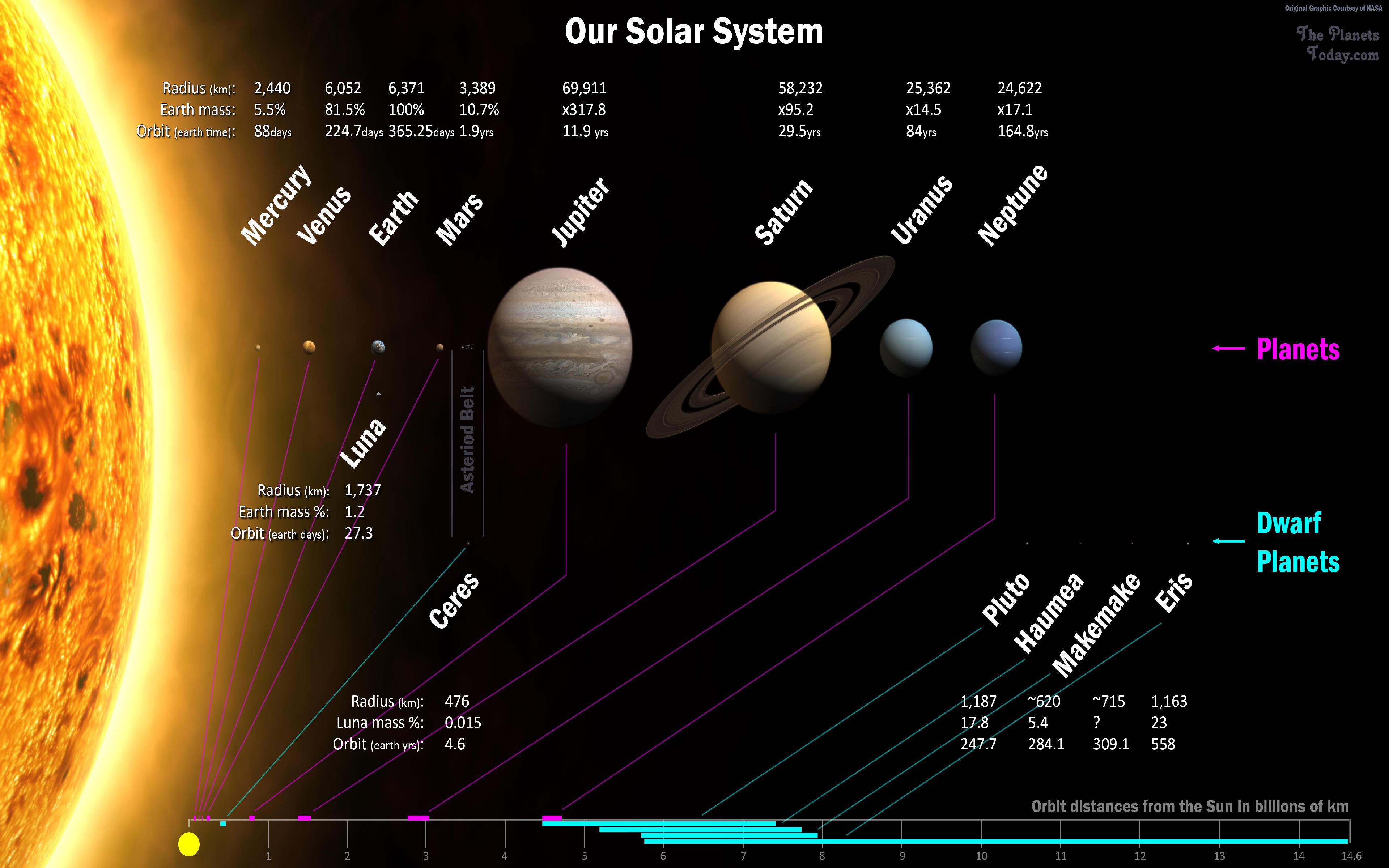
Astronomers have recently discovered new interesting data about the distant planets of our system. This discovery helps us better understand how space works near us. Our solar system begins with the sun, which is a very large and very hot star. The sun is at the centre of everything and illuminates everything. The first planet after the sun is Mercury. Mercury is a small planet and very close to the heat of the sun. It is a rocky planet and has no satellites orbiting around it.
Right after Mercury, we find Venus. Venus is very bright in the night sky. Many people call Venus the twin of Earth, but it is a very different and very hot planet. Its surface is full of volcanoes and dense gases. After Venus, we meet Earth, our planet. Earth is special because it has liquid water and life. It is the only place we know where we can easily live. Earth also has a moon that orbits around it every month. After Earth, there is Mars.
Mars is famous for its intense red colour. Many space probes visit Mars to look for signs of ancient history. Mars has very tall mountains and cold deserts. After Mars, space becomes larger and more distant. We find Jupiter, which is the largest planet in the entire solar system. Jupiter is made of gas and does not have a solid surface like Earth. It is a giant planet and has many moons that accompany it on its journey. After Jupiter, there is Saturn.
Saturn is very beautiful because it has spectacular rings. These rings are made of ice and dust. Saturn is also a gas giant, just like Jupiter. After Saturn, we find Uranus. Uranus is a distant and very cold planet. It has a light blue colour and is very difficult to see without a powerful telescope. Uranus rotates in a strange way compared to the other planets. Finally, we arrive at Neptune. Neptune is the last planet of our solar system. It is an icy world and very far from the heat of the sun.
Neptune has very strong winds and a deep blue colour. Our knowledge of the solar system grows every day thanks to scientists studying the sky. Each planet has a particular story and a unique beauty. Looking at the stars and planets is a fantastic way to learn new things. Space is enormous and we live only in a small part of it. I hope this journey among the planets has been helpful and interesting for you.
Now that we have visited all the main planets, we can also look at other objects that populate the space near us. Between Mars and Jupiter, there is a very wide area called the main asteroid belt. Here, thousands of small and large rocks orbit around the sun. These asteroids are like ancient remnants of the birth of the solar system. They are not planets, but pieces of matter that did not come together to create something larger.
Many scientists study these rocks because they tell us how space was billions of years ago. Beyond Neptune, there are also very distant and small objects. Once we counted Pluto as the ninth planet, but today astronomers call it a dwarf planet. Pluto is very small and far away. Near it, there are other icy celestial bodies that are part of a region called the Kuiper belt. Space is full of surprises even where we think it is empty.
Science is incredible because it allows us to see things that are millions of kilometres away. When we study the solar system, we understand how vast the place we live in is. The solar system is not just a group of planets orbiting around a star. It is a perfect and complex structure. Every movement of a planet or a moon makes sense and has its own rules. Understanding these rules allows us to better understand the laws of physics that govern our daily lives as well.
If we think about how long it takes for sunlight to reach Neptune, we understand that distances in space are enormous. This imaginary journey among the planets teaches us that Earth is a very lucky place. We have air, water, and a suitable temperature. Many other planets are too hot or too cold. Looking at the night sky makes us feel part of something much larger than ourselves. It is important to learn these basic concepts because knowledge frees us to dream.
Every time you look at the moon or the bright stars, remember that you are seeing only a small part of a huge system. Curiosity is the engine of everything. Perhaps one day people will be able to travel between the planets and discover even more details about Mars or the gas giants. For now, telescopes are our best eyes. Keep reading and studying the sky whenever you can. Science is a constant journey that never ends.
Knowing how our solar system works helps us appreciate the beauty of our planet even more. The sun continues to shine every day, holding everything together with its gravitational force, just like a heart beating at the centre of a group of friends. The story of the solar system is our story, and every new discovery is a gift for all humanity.
Comments (0)
Be the first to comment.
You need to be signed in to leave a comment.
Sign in