
Sir David Attenborough at 100
Sir David Attenborough’s century of storytelling shows how one voice can shape our understanding of the natural world.
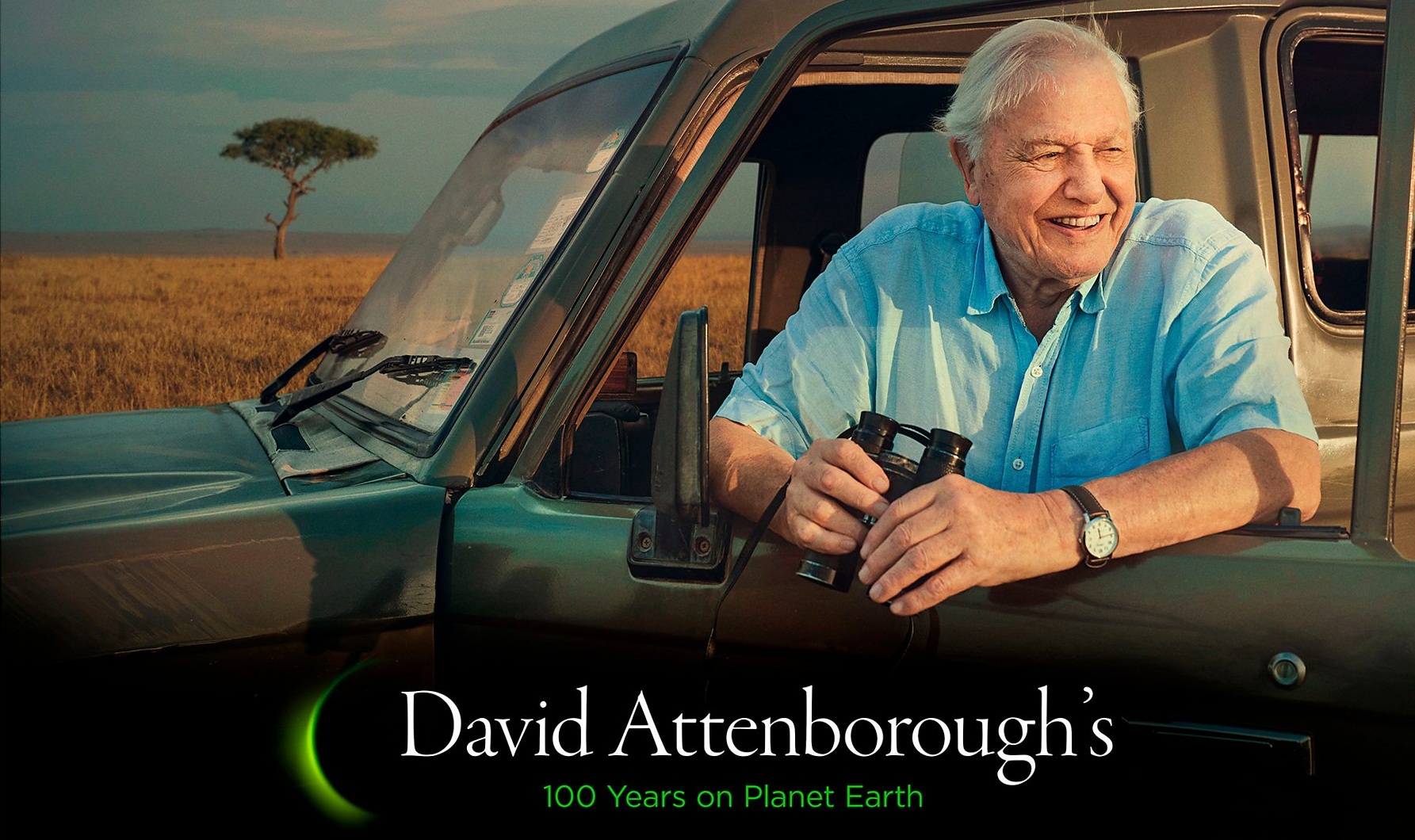
There are individuals who document the world, and there are those who expand it. Sir David Attenborough belongs to the latter category — a figure whose life has not only chronicled the natural world but reshaped humanity’s relationship with it. As he reaches his hundredth year, Attenborough stands as both witness and storyteller, a guide whose voice has become synonymous with curiosity, care, and the fragile beauty of Earth.
The BBC’s celebration at the Royal Albert Hall captured this truth with rare clarity: Attenborough’s legacy is not simply a body of work, but a worldview. Through orchestral performances, archival sequences, and tributes from global cultural and scientific leaders, the evening traced the arc of a life that has helped millions see the planet with new eyes.
Yet to understand the depth of that legacy, one must look beyond the celebration and into the long, intricate biography behind it, a story that begins in academic corridors and stretches across continents, ecosystems, and generations.
Origins of a Naturalist: A Childhood Shaped by Curiosity
David Attenborough was born on 8 May 1926 in Isleworth, London, and raised in Leicester, where his father served as principal of the local university. Growing up on campus, he was surrounded by books, specimens, and ideas; an environment that nurtured his early fascination with the natural world. As a boy, he collected fossils, eggshells, and even sold captured newts to the university’s zoology department, a charming foreshadowing of the naturalist he would become (see this post).
He later studied geology and zoology at Cambridge, graduating with a wartime degree before serving in the Royal Navy and briefly working in publishing. These early years formed the intellectual foundation for a career that would merge science, storytelling, and exploration.
The Birth of a New Voice in Broadcasting
Attenborough joined the BBC in 1952 and soon co‑created Zoo Quest (1954), a groundbreaking series that brought live animals and real expeditions into viewers’ homes for the first time. His on‑screen presence — curious, warm, and quietly delighted — became instantly recognisable. The show’s success expanded the BBC’s ambitions and marked the beginning of a new era in educational broadcasting.
By the mid‑1960s, Attenborough had risen to become controller of BBC‑2, where he championed bold programming including Civilisation, The Ascent of Man, and even Monty Python’s Flying Circus. Yet administration could not contain his passion for the natural world. In 1972, he stepped away from executive roles to return to the field — a decision that would lead to some of the most influential documentaries ever made.
The Life Series: A Monument to Earth’s Story
Beginning with Life on Earth (1979), Attenborough embarked on a decades‑long project that would become the Life series, an extraordinary survey of evolution, behaviour, and ecology across nearly every major group of organisms.
Each instalment — The Living Planet, The Trials of Life, The Life of Birds, The Life of Mammals, Life in the Undergrowth, Life in Cold Blood — pushed the boundaries of natural history filmmaking. The series pioneered techniques such as time‑lapse, macro cinematography, and low‑light filming, capturing behaviours never before seen on screen. Attenborough travelled extensively with crews, often waiting weeks or months for a single moment of rare animal behaviour.
The result was not just a documentary series, but a global phenomenon, reaching more than 500 million viewers and setting new standards for scientific storytelling.
Planet Earth, Blue Planet, and the Age of Global Impact
The 21st century brought Attenborough’s work to unprecedented scale. The Blue Planet (2001) and Planet Earth (2006) introduced audiences to the oceans’ hidden worlds and the planet’s most remote landscapes. Their successors — Planet Earth II, Blue Planet II, and Planet Earth III — combined cinematic technology with Attenborough’s narration to create cultural touchstones.
Blue Planet II (2017), in particular, sparked a global conversation about plastic pollution, influencing policy, corporate behaviour, and public awareness. Attenborough’s voice had become not only a guide to nature, but a catalyst for environmental action.
His later works — Climate Change: The Facts (2019), A Life on Our Planet (2020), Wild Isles (2023), and Ocean with David Attenborough (2025) — reflect a shift from exploration to advocacy, blending scientific clarity with moral urgency.
A Life of Recognition, Influence, and Meaning
Attenborough’s contributions have been recognised with an extraordinary array of honours: multiple BAFTAs, Emmys, a Peabody Award, the UN’s Champions of the Earth Lifetime Achievement Award, and two knighthoods, including a Knight Grand Cross in 2022.
More than 50 species have been named after him — frogs, plants, dragonflies, trees, even fossilised plesiosaurs — a testament to the scientific community’s admiration.
Yet perhaps the most meaningful recognition came during the BBC’s centenary celebration. Tributes from Judi Dench, Olivia Colman, Hans Zimmer, Leonardo DiCaprio, and His Majesty The King underscored the breadth of his influence. The evening closed with Attenborough reading What a Wonderful World, a moment that felt less like nostalgia and more like a gentle call to responsibility.
Why Attenborough Matters Now
In an era defined by ecological uncertainty, Attenborough offers something rare: a blend of truth, tenderness, and hope. His work bridges the gap between scientific knowledge and emotional connection, reminding us that understanding the natural world is inseparable from caring for it.
His message is simple, but profound:
We protect what we understand, and we understand what we take the time to see.
Attenborough has spent a century helping humanity see.
A Century of Wonder
Sir David Attenborough’s life is not merely a biography — it is a lens through which millions have learned to view the planet. From a boy collecting fossils in Leicester to a global icon of environmental storytelling, his journey reflects the power of curiosity, humility, and persistence.
As he continues to narrate new series even at 100, Attenborough reminds us that the story of Earth is ongoing — and that we are all part of it.
Comments (0)
Be the first to comment.
You need to be signed in to leave a comment.
Sign in