
The Rise of Quantum Computing: A New Era in Technology
Quantum computing is revolutionising technology, offering unprecedented processing power and potential applications across various industries.
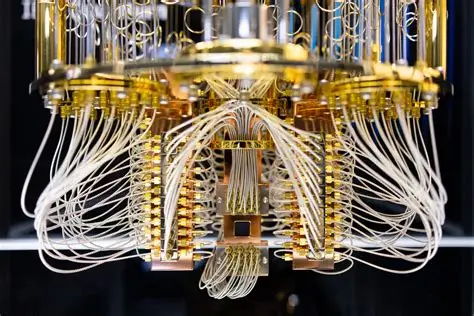
In recent years, quantum computing has emerged as one of the most exciting fields in technology. Unlike traditional computers, which use bits to process information as 0s and 1s, quantum computers use quantum bits, or qubits. This fundamental difference allows quantum computers to perform complex calculations at speeds unimaginable with current technology.
One of the most significant breakthroughs in quantum computing occurred in 2020 when Google claimed to have achieved 'quantum supremacy.' This term refers to the point at which a quantum computer can perform a calculation that is practically impossible for a classical computer. Google’s quantum computer, named Sycamore, completed a specific task in just 200 seconds that would take the most advanced supercomputers thousands of years to finish. This achievement sparked excitement and debate within the scientific community about the potential applications of quantum computing.
So, what makes quantum computing so powerful? The answer lies in the principles of quantum mechanics. Qubits can exist in multiple states at once, thanks to a property called superposition. This means that a quantum computer can process a vast amount of information simultaneously. Additionally, qubits can be entangled, allowing them to be interconnected in ways that classical bits cannot. This entanglement enables quantum computers to solve problems more efficiently, particularly in fields like cryptography, material science, and complex system simulations.
Many companies and research institutions are investing heavily in quantum technology. IBM, for instance, has developed a quantum computer called the IBM Quantum System One, which is available for researchers and businesses to use through the cloud. This accessibility allows more people to experiment with quantum algorithms and develop new applications.
Another notable player in this field is D-Wave Systems, which focuses on quantum annealing, a specific type of quantum computing that is particularly effective for optimisation problems. Their systems have been used in various industries, from finance to logistics, to find optimal solutions more quickly than classical computers.
Despite the excitement, quantum computing is still in its infancy. There are significant challenges to overcome, such as error rates in qubit operations and the need for extremely low temperatures to maintain qubit stability. Researchers are actively working on these issues, and progress is being made. For example, new error-correction techniques are being developed to improve the reliability of quantum computations.
The potential applications of quantum computing are vast. In the pharmaceutical industry, for instance, quantum computers could simulate molecular interactions, leading to the discovery of new drugs much faster than traditional methods. In finance, they could optimise trading strategies and risk assessments, providing a competitive edge in the market. Furthermore, quantum computing could revolutionise artificial intelligence by enabling more sophisticated algorithms that can learn and adapt more efficiently.
As we look to the future, the integration of quantum computing into everyday technology seems inevitable. Governments and private sectors are recognising its importance, leading to increased funding and collaboration in research. The UK, for example, has launched initiatives to support quantum technology development, aiming to position itself as a leader in this emerging field.
In conclusion, quantum computing represents a significant leap forward in technology. While we are still in the early stages of its development, the potential benefits are enormous. As researchers continue to tackle the challenges and unlock the capabilities of quantum systems, we may soon find ourselves in a world where quantum computers are commonplace, transforming industries and our daily lives in ways we can only begin to imagine.
Comments (0)
Be the first to comment.
You need to be signed in to leave a comment.
Sign in