
 Tipos de Dientes
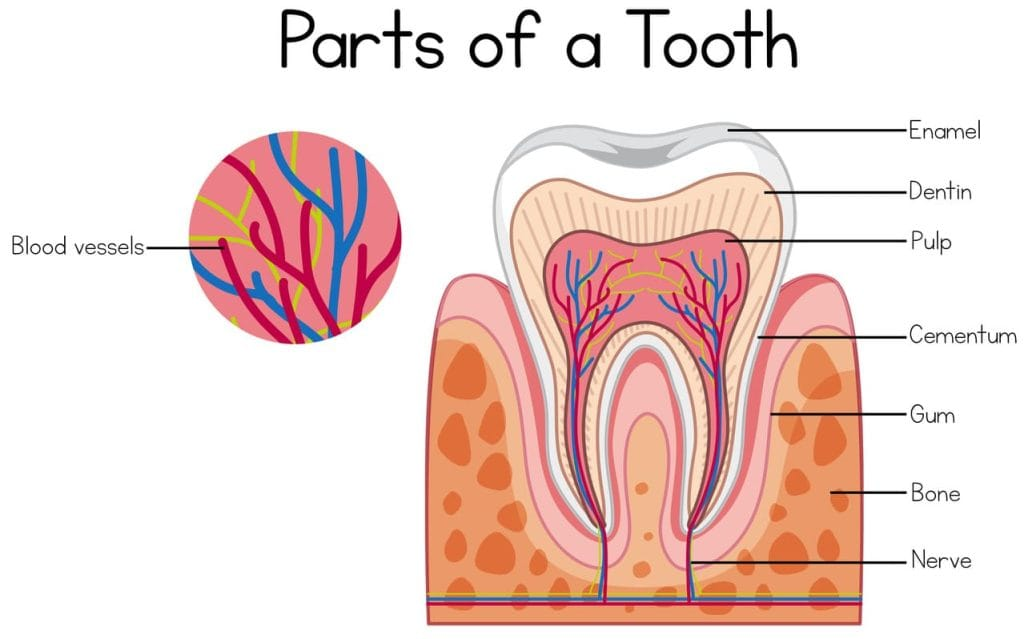
Los dientes son una parte esencial del cuerpo para comer, hablar, sonreír, etc. Hay muchos tipos diferentes de dientes con diferentes nombres. Es una de las partes más fuertes del cuerpo humano y está compuesta por esmalte, dentina, cemento y pulpa. Vamos a entender el diente humano con el diagrama anatómico dado a continuación y aprender en detalle.
Anatomía del Diente con Diagrama y Nombres
Partes de los Dientes
Un diente tiene principalmente dos partes:
- Corona: La corona del diente es la parte superior del diente que puedes ver clínicamente en tu boca. La parte de la corona está cubierta por esmalte, que la protege.
- Raíz: La raíz no es clínicamente visible en la boca en condiciones normales, ya que está cubierta por la línea de las encías, fija en el alvéolo dental o en el hueso alveolar con ligamentos periodontales que mantienen el diente en el alvéolo.
De Qué Están Hechos los Dientes
Los dientes están compuestos de esmalte, dentina, cemento y pulpa. (Capas de los Dientes)
- Esmalte: Es la capa más externa que cubre la parte de la corona de los dientes. Es la estructura más dura del cuerpo que protege los dientes.
- Dentina: Es la segunda capa debajo del esmalte que proporciona la masa estructural a los dientes. Contiene túbulos dentinarios, y no es tan dura como el esmalte, y se caries más fácilmente que el esmalte. Si la dentina está expuesta al entorno exterior debido al desgaste del esmalte, causa hipersensibilidad dentinaria, también conocida como sensibilidad dental. Aprende más sobre Dentina.
- Cemento: Cubre la parte de la raíz del diente y ancla el diente con fibras periodontales dentro del alvéolo.
- Pulpa: La pulpa está disponible en la cámara pulpar, que es la parte más interna de los dientes. La pulpa está compuesta por vasos sanguíneos, nervios y tejido conectivo. Proporciona nutrición al diente y da sensación al diente.
Tipos de Dientes en Humanos
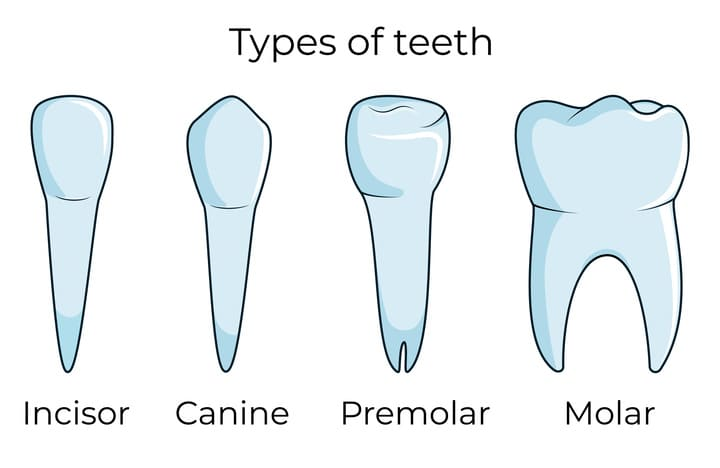
Hay cuatro tipos de dientes en los humanos adultos: Incisivos, Caninos, Premolares y Molares; los premolares están ausentes en los niños. Los humanos adultos tienen 32 dientes permanentes en sus bocas, y los niños tienen 20 dientes en sus bocas.
Incisivos
Estos son tus dientes frontales o dientes anteriores. Cada individuo tiene un total de 8 incisivos, tanto en niños como en adultos, y tiene dos tipos de dientes incisivos, 2 incisivos centrales y 2 incisivos laterales a cada lado en la mandíbula superior e inferior.
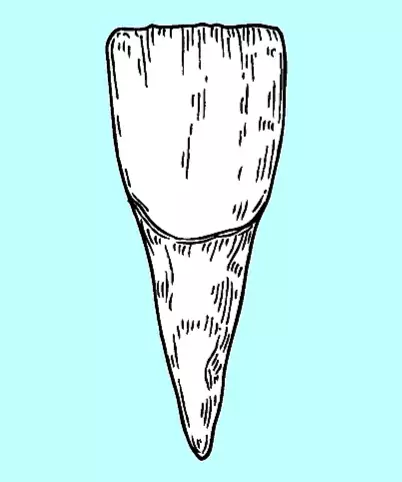
Los incisivos son planos y tienen bordes afilados (en forma de cincel) para morder la comida y cortarla en pedazos más pequeños.
Caninos
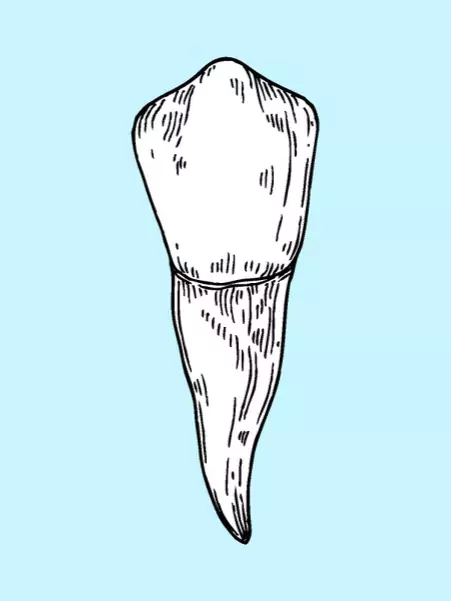
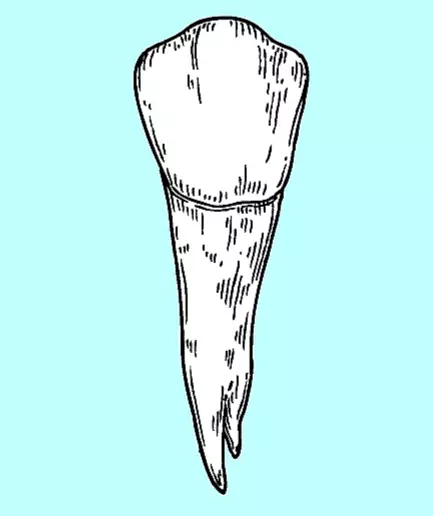
Hay 4 caninos en total, 1-1 canino a cada lado en la mandíbula superior e inferior. Son dientes puntiagudos y se utilizan principalmente para desgarrar los alimentos. Los caninos también se conocen como cuspides.
Premolares
Los premolares son 8 en total, 2-2 premolares a cada lado en la mandíbula superior e inferior. Los premolares también se conocen como bicúspides. Se utilizan principalmente para cortar y moler los alimentos. Los premolares están ausentes en los niños.
Molares
Los molares son los dientes más grandes con grandes áreas de superficie que les ayudan a masticar y moler los alimentos para hacerlos más pequeños y facilitar la deglución. Los dientes molares son 12 en total en adultos y 8 en número en niños.
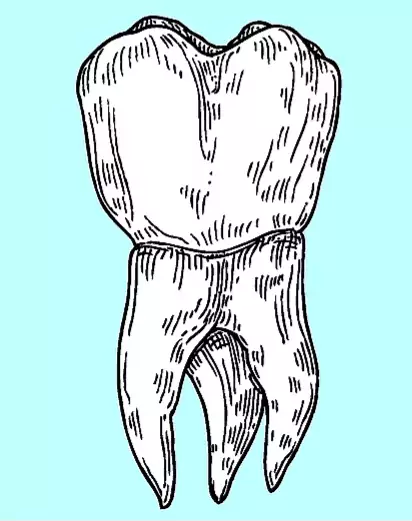
Los niños tienen 2-2 molares a cada lado en la mandíbula superior e inferior, y los adultos tienen 3-3 molares (incluyendo los dientes de sabiduría, el último diente molar) a cada lado en la mandíbula superior e inferior. Los 3er molares, o dientes de sabiduría, están ausentes en los niños.
En los niños, hay 20 dientes presentes, y estos se conocen como dientes deciduos o dientes primarios, también conocidos como dientes de leche o dientes de bebé. Los niños tienen principalmente tres tipos de dientes: 8 Incisivos, 4 Caninos y 8 Molares; los premolares no están presentes en los infantes. La erupción dental comienza con los incisivos centrales inferiores. Más tarde, los dientes primarios o deciduos son reemplazados por dientes permanentes.
Un humano adulto promedio tiene 32 dientes en su boca; también conocidos como dientes permanentes, o dientes sucedáneos, o dientes de adulto. Los adultos tienen 8 Incisivos, 4 Caninos, 8 Premolares y 12 dientes molares incluyendo los dientes de sabiduría.
Como discutimos, los humanos adultos tienen 32 dientes permanentes, y los niños tienen 20 dientes de leche o dientes deciduos a la edad de 3 años. Pero en algunas personas, pueden tener un menor número de dientes o dientes faltantes, o en algunos casos, pueden tener dientes extra.
Los dientes de sabiduría, o 3er molares, son los últimos dientes en la boca; en su mayoría, no son funcionales y no se utilizan para masticar alimentos. No todas las personas pueden tener dientes de sabiduría, ya que a veces están cubiertos por encías o tejido gingival y no erupcionan en la cavidad oral (boca), también conocido como diente de sabiduría impactado. Esto causa dolor en el movimiento del diente de sabiduría.
Superficies de los Dientes
- Superficie Mesial: Una superficie dental que está cerca de la línea media o centro entre dos dientes frontales se llama superficie mesial.
- Superficie Distal: Una superficie dental que está muy lejos o alejada de la línea media o centro entre dos dientes frontales se llama superficie distal.
- Superficie Facial: Una superficie dental que está hacia tu cara. Para los dientes anteriores, es la superficie labial, y para los dientes posteriores, es la superficie bucal.
- Superficie Labial: Una superficie dental que está orientada hacia los labios se llama superficie labial, como los incisivos y caninos.
- Superficie Bucal: Una superficie dental que está orientada hacia la mejilla se llama superficie bucal, como la de los premolares y molares.
- Superficie Oclusal: Una superficie dental que se utiliza para masticar y moler alimentos se llama superficie oclusal de un diente. Como los premolares y molares.
- Superficie Incisal: Una superficie dental que es como un borde cortante, como el borde cortante de los incisivos.
- Superficie Proximal: Una superficie dental que está orientada hacia el diente siguiente; por ejemplo, la superficie mesial del primer premolar y la superficie distal del canino.
Funciones de los Dientes
En general, los dientes ayudan a cortar, desgarrar, moler y mezclar alimentos en los humanos. Los incisivos generalmente cortan la comida, los caninos desgarran la comida, y los molares muelen los alimentos y los convierten en un bolo pre-deglución. Los dientes también facilitan la función del habla y la estructura facial en general.
Resumiendo
Los dientes son una parte esencial de nuestro cuerpo que no solo ayudan a comer, sino que también ayudan a pronunciar ciertas palabras, por lo que es importante cuidar tus dientes porque la enfermedad de un solo diente te hace sentir incómodo en tus actividades diarias.
 Types of Teeth
Teeth are an essential part of the body for eating food, speaking, smiling, etc. There are many different types of teeth with different names. It’s one of the strongest parts of the human body and is made up of Enamel, Dentin, Cementum, and Pulp. Let’s understand the Human tooth with the anatomical diagram given below and learn in detail.
Tooth Anatomy with Diagram and Names
Parts of Teeth
A tooth has mainly two parts:
- Crown: The tooth Crown is the top portion of the tooth that you can clinically see in your mouth. The crown portion is covered by enamel, which protects it.
- Root : The root is clinically not visible in the mouth in normal conditions, as it is covered under the gum line, fixed in the tooth socket, or alveolar bone socket with periodontal ligaments that hold the tooth in the socket.
What Are Teeth Made of
Teeth are made up of Enamel, Dentin, Cementum, and Pulp. (Layers of Teeth)
- Enamel: It is the outermost layer covering the crown portion of teeth. It is the hardest structure in the body that protects the teeth.
- Dentin: It is the second layer beneath the enamel covering that provides the structural mass to teeth. It contains dentinal tubules, and it’s not as hard as enamel, and it gets cavities more easily than enamel. If dentin is exposed in the outer environment due to enamel wear, it causes dentinal hypersensitivity also known as teeth sensitivity. Learn more about Dentin/Dentine
- Cementum: It covers the root portion of the tooth and anchors the tooth with periodontal fibers within the socket.
- Pulp: Pulp is available in the pulp chamber, which is the innermost part of the teeth. Pulp is made up of Blood vessels, Nerves, and Connective tissue. It provides nourishment to the tooth and gives sensation to the tooth.
Types of Teeth in Humans
There are four types of teeth in adult humans. Incisors, Canines, Premolars, and Molars; Premolars are absent in children. Adult humans have 32 permanent teeth in their mouths, and children have 20 teeth in their mouths.
Incisors
These are your front teeth or anterior teeth. Every individual has a total of 8 incisors, both in children and adults, and has two types of incisor teeth, 2 central incisors, and 2 lateral incisors on each side in the upper and lower jaw.
Incisors are flat and have sharp edges (chisel-shaped) to bite into the food and cut it into smaller pieces.
Canines
There are 4 canines in total, 1-1 canine on each side in the upper and lower jaw. They are sharp pointed teeth and are mostly used for tearing down food items. Canines are also known as cuspids.
Premolars
Premolars are 8 in total, 2-2 premolars on each side in the upper and lower jaw. Premolars are also known as bicuspid. They are mainly used for cutting and grinding food items. Premolars are absent in children.
Molars
Molars are the largest teeth with large surface areas to help them chew and grind food to make it smaller and facilitate swallowing. Molar teeth are 12 in total in adults and 8 in number in children.
Children have 2-2 molars on each side in the upper and lower jaw, and adults have 3-3 molars (including Wisdom teeth, the last 3rd molar tooth) on each side in the upper and lower jaw. 3rd Molars, or Wisdom teeth, are absent in children.
In children, 20 teeth are present, and these are known as deciduous teeth or primary teeth, also known as milk teeth or baby teeth. Children have mainly three types of teeth: 8 Incisors, 4 Canines, and 8 Molars; premolars are not present in infants. Tooth Eruption starts with the lower central incisors. Later, primary teeth or deciduous teeth are replaced by permanent teeth.
An average adult human has 32 teeth in his/her mouth; also known as permanent teeth, or succedaneous teeth, or adult teeth. Adults have 8 Incisors, 4 Canines, 8 Premolars, and 12 molars teeth including Wisdom teeth.
As we discussed, adult humans have 32 permanent teeth, and children have 20 milk teeth or deciduous teeth at the age of 3 years. But in some people, they have less number of teeth or missing teeth, or in some cases, they may have extra teeth.
Wisdom teeth, or 3rd molars, are the last teeth in the mouth; mostly, they are not functional and are not used for chewing food. Not all people may have wisdom teeth, as sometimes they are covered by gums or gingival tissue and do not erupt in the oral cavity (mouth), also known as an impacted wisdom tooth. This causes pain in the movement of the wisdom tooth.
Tooth Surfaces
- Mesial Surface: A tooth surface that is close to the midline or center between two front teeth is called the mesial surface.
- Distal Surface: A tooth surface that is very far or away from the midline or center between two front teeth is called the distal surface.
- Facial Surface: A tooth surface is towards your face. For anterior teeth, it is the labial surface, and for the posterior teeth, it is the buccal surface.
- Labial Surface: A tooth surface facing towards the lips is called the labial surface, such as incisors, canines.
- Buccal Surface: A tooth surface facing towards the cheek is called the buccal surface, such as that of premolars and molars.
- Occlusal Surface: A tooth surface that is used for chewing and grinding food is called the occlusal surface of a tooth. Such as premolars and molars.
- Incisal Surface: A tooth surface that is like a cutting edge, like the cutting edge of incisors.
- Proximal Surface: A tooth surface facing the next tooth; for instance, the mesial surface of the first premolar and the distal surface of the canine.
Functions of Teeth
Overall, Teeth help cut, tear, grind, and mix food in humans. Incisors generally cut the food, canines tear the food, and molars grind the food items and convert them into a pre-swallow bolus. Teeth also facilitate the speaking function and overall facial structure.
Summing up
Teeth are an essential part of our body that not only help in eating food, but also help in speaking certain words, so it is important to take care of your teeth because the illness of a single tooth makes you uncomfortable in your day-to-day activities.