
 Tipos de Dentes
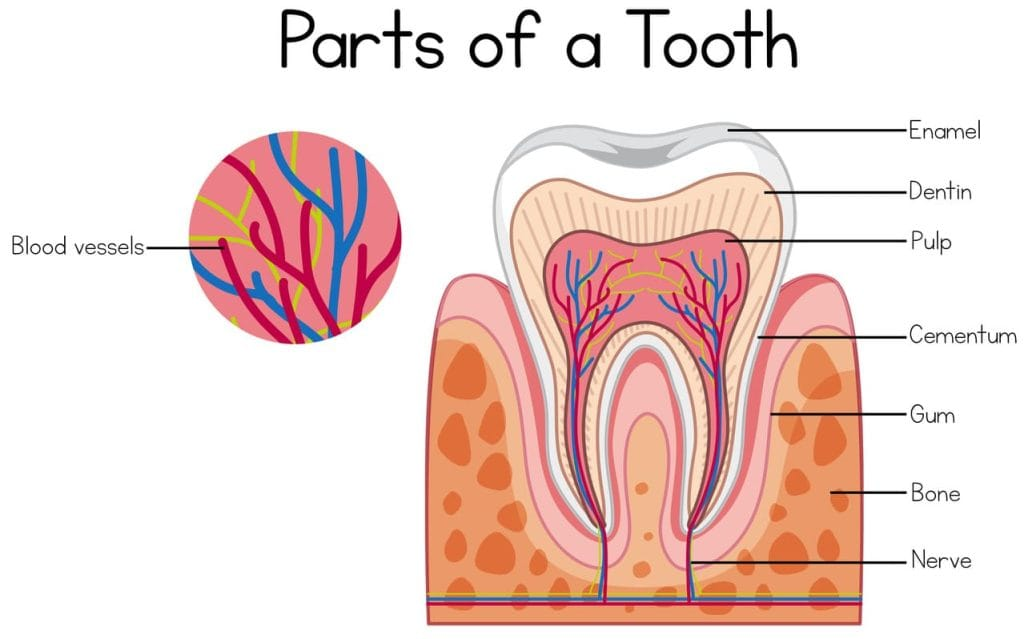
Os dentes são uma parte essencial do corpo para comer, falar, sorrir, etc. Existem muitos tipos diferentes de dentes com nomes diferentes. É uma das partes mais fortes do corpo humano e é composta por Esmalte, Dentina, Cemento e Polpa. Vamos entender o dente humano com o diagrama anatômico dado abaixo e aprender em detalhes.
Anatomia do Dente com Diagrama e Nomes
Partes dos Dentes
Um dente tem principalmente duas partes:
- Coroa: A coroa do dente é a parte superior do dente que você pode ver clinicamente na sua boca. A parte da coroa é coberta por esmalte, que a protege.
- Raiz: A raiz não é clinicamente visível na boca em condições normais, pois está coberta pela linha da gengiva, fixada no alvéolo dentário ou no osso alveolar com ligamentos periodontais que seguram o dente no alvéolo.
Do Que São Feitos os Dentes
Os dentes são compostos por Esmalte, Dentina, Cemento e Polpa. (Camadas dos Dentes)
- Esmalte: É a camada mais externa que cobre a parte da coroa dos dentes. É a estrutura mais dura do corpo que protege os dentes.
- Dentina: É a segunda camada abaixo da cobertura de esmalte que fornece a massa estrutural aos dentes. Contém túbulos dentinários, e não é tão dura quanto o esmalte, e forma cáries mais facilmente do que o esmalte. Se a dentina estiver exposta ao ambiente externo devido ao desgaste do esmalte, causa hipersensibilidade dentinária, também conhecida como sensibilidade dental. Saiba mais sobre Dentina.
- Cemento: Cobre a parte da raiz do dente e ancla o dente com fibras periodontais dentro do alvéolo.
- Polpa: A polpa está disponível na câmara pulpar, que é a parte mais interna dos dentes. A polpa é composta por vasos sanguíneos, nervos e tecido conjuntivo. Ela fornece nutrição ao dente e dá sensação ao dente.
Tipos de Dentes em Humanos
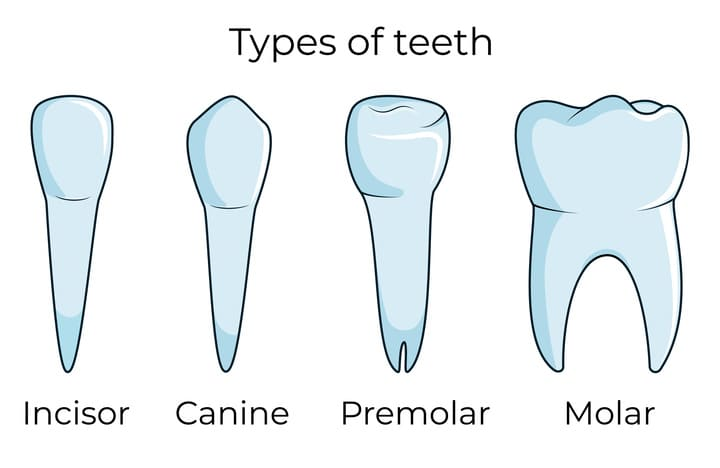
Existem quatro tipos de dentes em humanos adultos: Incisivos, Caninos, Pré-molares e Molares; os pré-molares estão ausentes em crianças. Os humanos adultos têm 32 dentes permanentes em suas bocas, e as crianças têm 20 dentes em suas bocas.
Incisivos
Estes são os seus dentes frontais ou dentes anteriores. Cada indivíduo tem um total de 8 incisivos, tanto em crianças quanto em adultos, e possui dois tipos de dentes incisivos, 2 incisivos centrais e 2 incisivos laterais de cada lado na mandíbula superior e inferior.
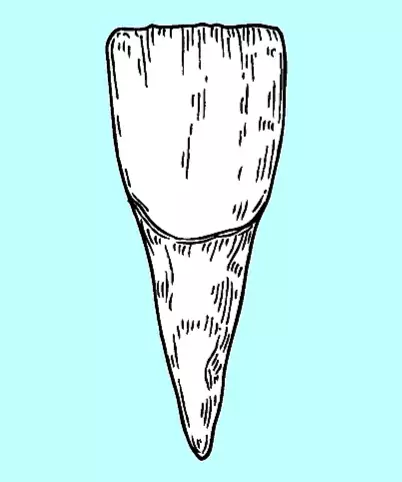
Os incisivos são planos e têm bordas afiadas (em forma de cinzel) para morder os alimentos e cortá-los em pedaços menores.
Caninos
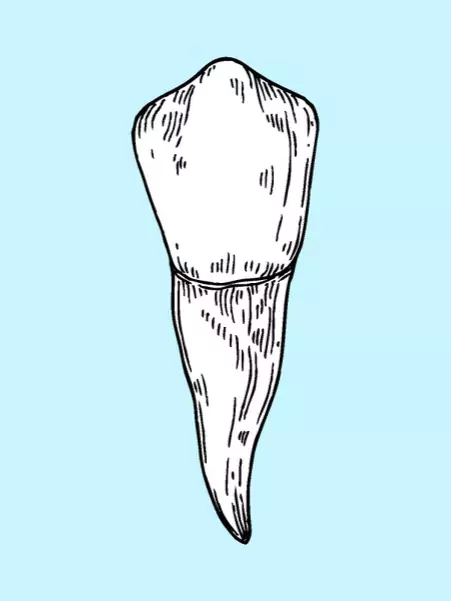
Existem 4 caninos no total, 1-1 canino de cada lado na mandíbula superior e inferior. Eles são dentes pontiagudos e são usados principalmente para rasgar alimentos. Os caninos também são conhecidos como cuspídeos.
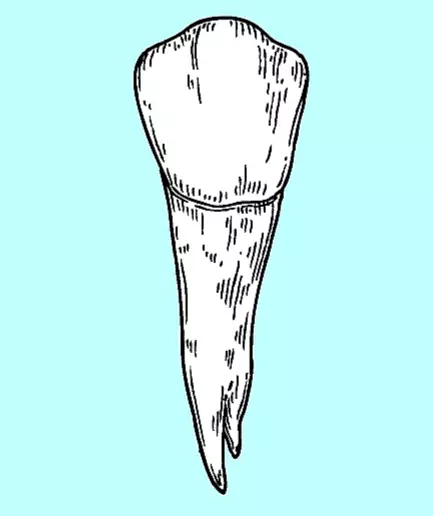
Pré-molares
Os pré-molares são 8 no total, 2-2 pré-molares de cada lado na mandíbula superior e inferior. Os pré-molares também são conhecidos como bicúspides. Eles são usados principalmente para cortar e moer alimentos. Os pré-molares estão ausentes em crianças.
Molares
Os molares são os maiores dentes com grandes superfícies para ajudá-los a mastigar e moer alimentos para torná-los menores e facilitar a deglutição. Os dentes molares são 12 no total em adultos e 8 em crianças.
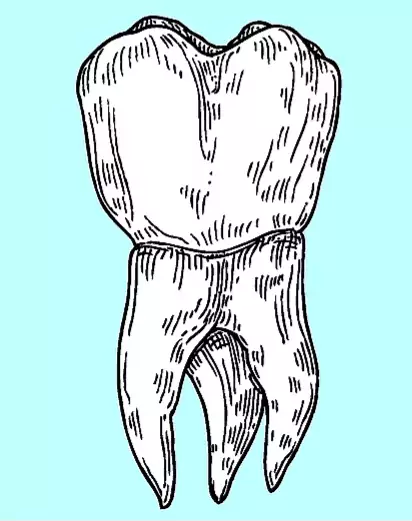
As crianças têm 2-2 molares de cada lado na mandíbula superior e inferior, e os adultos têm 3-3 molares (incluindo os dentes do siso, o último dente molar) de cada lado na mandíbula superior e inferior. Os 3º molares, ou dentes do siso, estão ausentes em crianças.
Em crianças, 20 dentes estão presentes, e estes são conhecidos como dentes decíduos ou dentes primários, também conhecidos como dentes de leite ou dentes de bebê. As crianças têm principalmente três tipos de dentes: 8 Incisivos, 4 Caninos e 8 Molares; os pré-molares não estão presentes em bebês. A erupção dos dentes começa com os incisivos centrais inferiores. Mais tarde, os dentes primários ou decíduos são substituídos por dentes permanentes.
Um adulto humano médio tem 32 dentes em sua boca; também conhecidos como dentes permanentes, ou dentes sucedâneos, ou dentes de adulto. Os adultos têm 8 Incisivos, 4 Caninos, 8 Pré-molares e 12 dentes molares, incluindo os dentes do siso.
Como discutimos, os humanos adultos têm 32 dentes permanentes, e as crianças têm 20 dentes de leite ou dentes decíduos aos 3 anos de idade. Mas em algumas pessoas, elas têm um número menor de dentes ou dentes faltando, ou em alguns casos, podem ter dentes extras.
Os dentes do siso, ou 3º molares, são os últimos dentes na boca; na maioria das vezes, eles não são funcionais e não são usados para mastigar alimentos. Nem todas as pessoas podem ter dentes do siso, pois às vezes estão cobertos por gengivas ou tecido gengival e não erupcionam na cavidade oral (boca), também conhecido como dente do siso impactado. Isso causa dor no movimento do dente do siso.
Superfícies dos Dentes
- Superfície Mesial: Uma superfície do dente que está próxima à linha média ou centro entre dois dentes frontais é chamada de superfície mesial.
- Superfície Distal: Uma superfície do dente que está muito longe ou afastada da linha média ou centro entre dois dentes frontais é chamada de superfície distal.
- Superfície Facial: Uma superfície do dente que está voltada para o seu rosto. Para dentes anteriores, é a superfície labial, e para os dentes posteriores, é a superfície bucal.
- Superfície Labial: Uma superfície do dente voltada para os lábios é chamada de superfície labial, como incisivos e caninos.
- Superfície Bucal: Uma superfície do dente voltada para a bochecha é chamada de superfície bucal, como a dos pré-molares e molares.
- Superfície Oclusal: Uma superfície do dente que é usada para mastigar e moer alimentos é chamada de superfície oclusal de um dente. Como os pré-molares e molares.
- Superfície Incisal: Uma superfície do dente que é como uma borda de corte, como a borda de corte dos incisivos.
- Superfície Proximal: Uma superfície do dente voltada para o próximo dente; por exemplo, a superfície mesial do primeiro pré-molar e a superfície distal do canino.
Funções dos Dentes
No geral, os dentes ajudam a cortar, rasgar, moer e misturar alimentos nos humanos. Os incisivos geralmente cortam os alimentos, os caninos rasgam os alimentos, e os molares moem os itens alimentares e os convertem em um bolo pré-deglutição. Os dentes também facilitam a função de fala e a estrutura facial geral.
Resumindo
Os dentes são uma parte essencial do nosso corpo que não apenas ajudam a comer, mas também ajudam a pronunciar certas palavras, por isso é importante cuidar dos seus dentes, pois a doença de um único dente pode causar desconforto nas suas atividades diárias.
 Types of Teeth
Teeth are an essential part of the body for eating food, speaking, smiling, etc. There are many different types of teeth with different names. It’s one of the strongest parts of the human body and is made up of Enamel, Dentin, Cementum, and Pulp. Let’s understand the Human tooth with the anatomical diagram given below and learn in detail.
Tooth Anatomy with Diagram and Names
Parts of Teeth
A tooth has mainly two parts:
- Crown: The tooth Crown is the top portion of the tooth that you can clinically see in your mouth. The crown portion is covered by enamel, which protects it.
- Root : The root is clinically not visible in the mouth in normal conditions, as it is covered under the gum line, fixed in the tooth socket, or alveolar bone socket with periodontal ligaments that hold the tooth in the socket.
What Are Teeth Made of
Teeth are made up of Enamel, Dentin, Cementum, and Pulp. (Layers of Teeth)
- Enamel: It is the outermost layer covering the crown portion of teeth. It is the hardest structure in the body that protects the teeth.
- Dentin: It is the second layer beneath the enamel covering that provides the structural mass to teeth. It contains dentinal tubules, and it’s not as hard as enamel, and it gets cavities more easily than enamel. If dentin is exposed in the outer environment due to enamel wear, it causes dentinal hypersensitivity also known as teeth sensitivity. Learn more about Dentin/Dentine
- Cementum: It covers the root portion of the tooth and anchors the tooth with periodontal fibers within the socket.
- Pulp: Pulp is available in the pulp chamber, which is the innermost part of the teeth. Pulp is made up of Blood vessels, Nerves, and Connective tissue. It provides nourishment to the tooth and gives sensation to the tooth.
Types of Teeth in Humans
There are four types of teeth in adult humans. Incisors, Canines, Premolars, and Molars; Premolars are absent in children. Adult humans have 32 permanent teeth in their mouths, and children have 20 teeth in their mouths.
Incisors
These are your front teeth or anterior teeth. Every individual has a total of 8 incisors, both in children and adults, and has two types of incisor teeth, 2 central incisors, and 2 lateral incisors on each side in the upper and lower jaw.
Incisors are flat and have sharp edges (chisel-shaped) to bite into the food and cut it into smaller pieces.
Canines
There are 4 canines in total, 1-1 canine on each side in the upper and lower jaw. They are sharp pointed teeth and are mostly used for tearing down food items. Canines are also known as cuspids.
Premolars
Premolars are 8 in total, 2-2 premolars on each side in the upper and lower jaw. Premolars are also known as bicuspid. They are mainly used for cutting and grinding food items. Premolars are absent in children.
Molars
Molars are the largest teeth with large surface areas to help them chew and grind food to make it smaller and facilitate swallowing. Molar teeth are 12 in total in adults and 8 in number in children.
Children have 2-2 molars on each side in the upper and lower jaw, and adults have 3-3 molars (including Wisdom teeth, the last 3rd molar tooth) on each side in the upper and lower jaw. 3rd Molars, or Wisdom teeth, are absent in children.
In children, 20 teeth are present, and these are known as deciduous teeth or primary teeth, also known as milk teeth or baby teeth. Children have mainly three types of teeth: 8 Incisors, 4 Canines, and 8 Molars; premolars are not present in infants. Tooth Eruption starts with the lower central incisors. Later, primary teeth or deciduous teeth are replaced by permanent teeth.
An average adult human has 32 teeth in his/her mouth; also known as permanent teeth, or succedaneous teeth, or adult teeth. Adults have 8 Incisors, 4 Canines, 8 Premolars, and 12 molars teeth including Wisdom teeth.
As we discussed, adult humans have 32 permanent teeth, and children have 20 milk teeth or deciduous teeth at the age of 3 years. But in some people, they have less number of teeth or missing teeth, or in some cases, they may have extra teeth.
Wisdom teeth, or 3rd molars, are the last teeth in the mouth; mostly, they are not functional and are not used for chewing food. Not all people may have wisdom teeth, as sometimes they are covered by gums or gingival tissue and do not erupt in the oral cavity (mouth), also known as an impacted wisdom tooth. This causes pain in the movement of the wisdom tooth.
Tooth Surfaces
- Mesial Surface: A tooth surface that is close to the midline or center between two front teeth is called the mesial surface.
- Distal Surface: A tooth surface that is very far or away from the midline or center between two front teeth is called the distal surface.
- Facial Surface: A tooth surface is towards your face. For anterior teeth, it is the labial surface, and for the posterior teeth, it is the buccal surface.
- Labial Surface: A tooth surface facing towards the lips is called the labial surface, such as incisors, canines.
- Buccal Surface: A tooth surface facing towards the cheek is called the buccal surface, such as that of premolars and molars.
- Occlusal Surface: A tooth surface that is used for chewing and grinding food is called the occlusal surface of a tooth. Such as premolars and molars.
- Incisal Surface: A tooth surface that is like a cutting edge, like the cutting edge of incisors.
- Proximal Surface: A tooth surface facing the next tooth; for instance, the mesial surface of the first premolar and the distal surface of the canine.
Functions of Teeth
Overall, Teeth help cut, tear, grind, and mix food in humans. Incisors generally cut the food, canines tear the food, and molars grind the food items and convert them into a pre-swallow bolus. Teeth also facilitate the speaking function and overall facial structure.
Summing up
Teeth are an essential part of our body that not only help in eating food, but also help in speaking certain words, so it is important to take care of your teeth because the illness of a single tooth makes you uncomfortable in your day-to-day activities.