
 Tipi di Denti
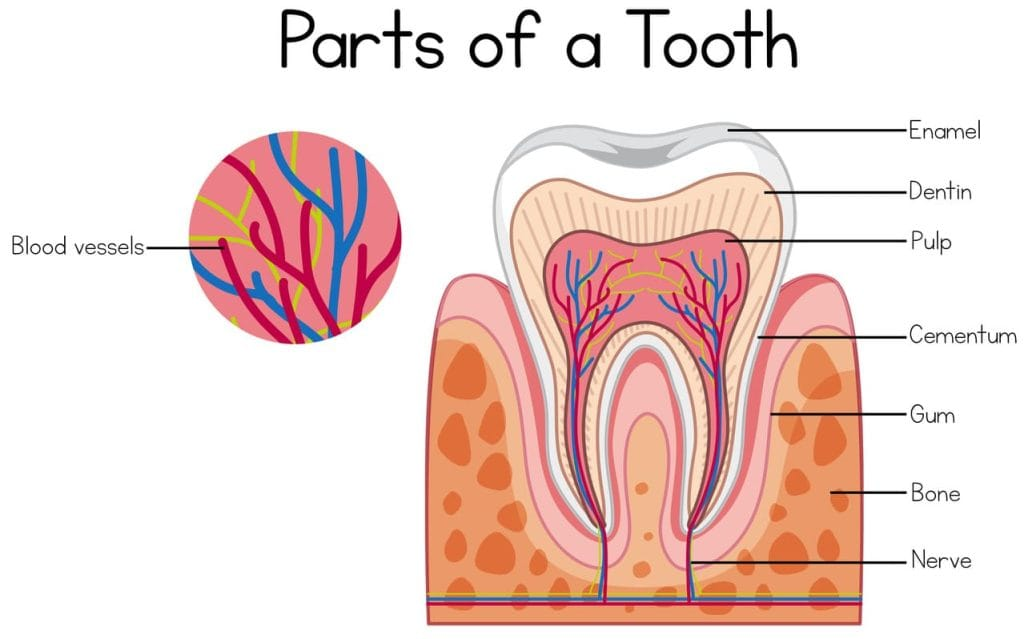
I denti sono una parte essenziale del corpo per mangiare, parlare, sorridere, ecc. Ci sono molti tipi diversi di denti con nomi diversi. È una delle parti più forti del corpo umano ed è composto da Smalto, Dentina, Cemento e Polpa. Comprendiamo il dente umano con il diagramma anatomico fornito di seguito e impariamo in dettaglio.
Anatomia del Dente con Diagramma e Nomi
Parti dei Denti
Un dente ha principalmente due parti:
- Corona: La corona del dente è la parte superiore del dente che puoi vedere clinicamente nella tua bocca. La parte della corona è coperta da smalto, che la protegge.
- Radice: La radice non è clinicamente visibile nella bocca in condizioni normali, poiché è coperta dalla linea gengivale, fissata nell'alveolo dentale o nell'alveolo osseo con legamenti parodontalici che tengono il dente nell'alveolo.
Di Cosa Sono Fatti i Denti
I denti sono composti da Smalto, Dentina, Cemento e Polpa. (Strati dei Denti)
- Smalto: È lo strato più esterno che copre la parte della corona dei denti. È la struttura più dura del corpo che protegge i denti.
- Dentina: È il secondo strato sotto la copertura di smalto che fornisce la massa strutturale ai denti. Contiene tubuli dentinali ed è meno duro dello smalto, e si caria più facilmente rispetto allo smalto. Se la dentina è esposta all'ambiente esterno a causa dell'usura dello smalto, provoca ipersensibilità dentinale nota anche come sensibilità dei denti. Scopri di più sulla Dentina.
- Cemento: Copre la parte della radice del dente e ancorare il dente con le fibre parodontaliche all'interno dell'alveolo.
- Polpa: La polpa è presente nella camera pulpare, che è la parte più interna dei denti. La polpa è composta da vasi sanguigni, nervi e tessuto connettivo. Fornisce nutrimento al dente e dà sensibilità al dente.
Tipi di Denti negli Umani
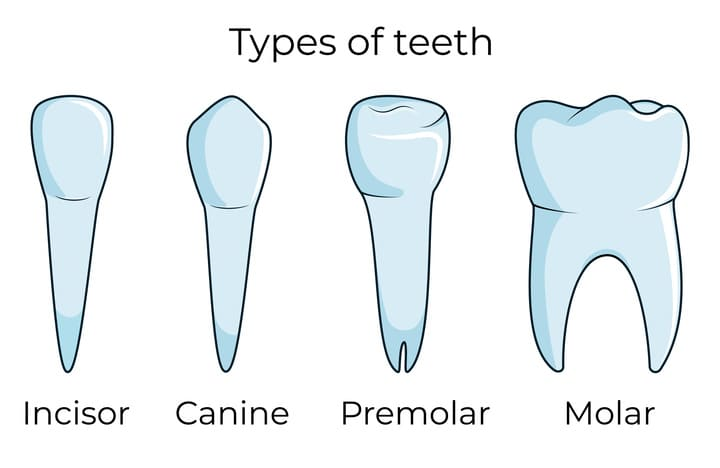
Ci sono quattro tipi di denti negli adulti umani: Incisivi, Canini, Premolari e Molari; i premolari sono assenti nei bambini. Gli adulti umani hanno 32 denti permanenti nella bocca, e i bambini hanno 20 denti nella bocca.
Incisivi
Questi sono i tuoi denti anteriori o denti anteriori. Ogni individuo ha un totale di 8 incisivi, sia nei bambini che negli adulti, e ha due tipi di denti incisivi, 2 incisivi centrali e 2 incisivi laterali su ciascun lato nella mascella superiore e inferiore.
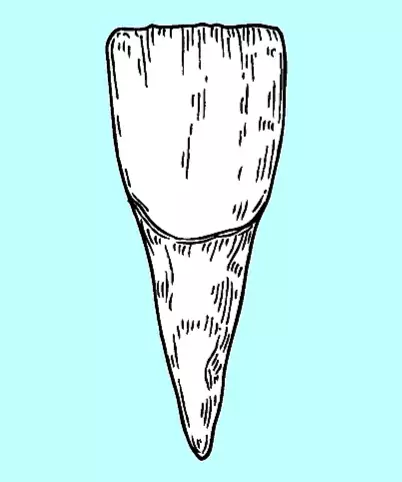
Gli incisivi sono piatti e hanno bordi affilati (a forma di scalpello) per mordere il cibo e tagliarlo in pezzi più piccoli.
Canini
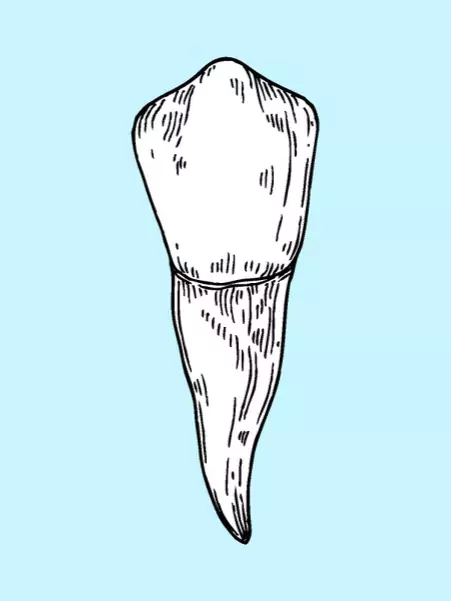
Ci sono 4 canini in totale, 1-1 canino su ciascun lato nella mascella superiore e inferiore. Sono denti appuntiti e vengono principalmente utilizzati per strappare i cibi. I canini sono anche noti come cuspidi.
Premolari
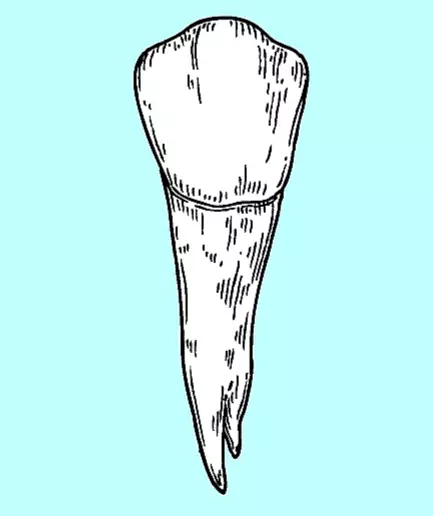
I premolari sono 8 in totale, 2-2 premolari su ciascun lato nella mascella superiore e inferiore. I premolari sono anche noti come bicuspidi. Vengono principalmente utilizzati per tagliare e macinare i cibi. I premolari sono assenti nei bambini.
Molari
I molari sono i denti più grandi con ampie superfici per aiutare a masticare e macinare il cibo per renderlo più piccolo e facilitare la deglutizione. I denti molari sono 12 in totale negli adulti e 8 nei bambini.
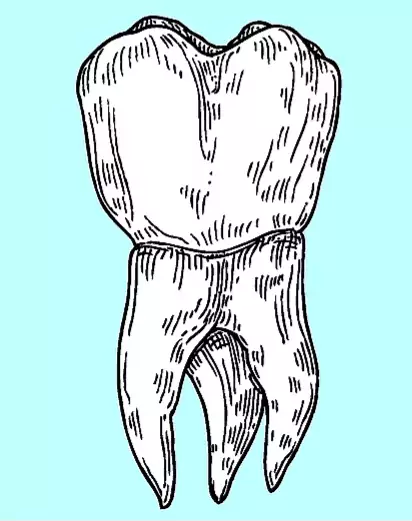
I bambini hanno 2-2 molari su ciascun lato nella mascella superiore e inferiore, e gli adulti hanno 3-3 molari (inclusi i denti del giudizio, l'ultimo dente molare) su ciascun lato nella mascella superiore e inferiore. I 3° molari, o denti del giudizio, sono assenti nei bambini.
Nei bambini, sono presenti 20 denti, noti come denti decidui o denti primari, noti anche come denti da latte o denti da bambino. I bambini hanno principalmente tre tipi di denti: 8 incisivi, 4 canini e 8 molari; i premolari non sono presenti nei neonati. L'eruzione dei denti inizia con gli incisivi centrali inferiori. Successivamente, i denti primari o decidui vengono sostituiti dai denti permanenti.
Un adulto medio ha 32 denti nella propria bocca; noti anche come denti permanenti, o denti succedanei, o denti adulti. Gli adulti hanno 8 incisivi, 4 canini, 8 premolari e 12 denti molari, inclusi i denti del giudizio.
Come abbiamo discusso, gli adulti umani hanno 32 denti permanenti, e i bambini hanno 20 denti da latte o denti decidui all'età di 3 anni. Ma in alcune persone, possono avere un numero inferiore di denti o denti mancanti, o in alcuni casi, possono avere denti extra.
I denti del giudizio, o 3° molari, sono gli ultimi denti nella bocca; per lo più, non sono funzionali e non vengono utilizzati per masticare il cibo. Non tutte le persone possono avere denti del giudizio, poiché a volte sono coperti da gengive o tessuto gengivale e non erompono nella cavità orale (bocca), noti anche come dente del giudizio incluso. Questo causa dolore nel movimento del dente del giudizio.
Superfici dei Denti
- Superficie Mesiale: Una superficie dentale che è vicina alla linea mediana o al centro tra due denti anteriori è chiamata superficie mesiale.
- Superficie Distale: Una superficie dentale che è molto lontana o distante dalla linea mediana o dal centro tra due denti anteriori è chiamata superficie distale.
- Superficie Faciale: Una superficie dentale rivolta verso il tuo viso. Per i denti anteriori, è la superficie labiale, e per i denti posteriori, è la superficie buccale.
- Superficie Labiale: Una superficie dentale rivolta verso le labbra è chiamata superficie labiale, come gli incisivi e i canini.
- Superficie Buccale: Una superficie dentale rivolta verso la guancia è chiamata superficie buccale, come quella dei premolari e dei molari.
- Superficie Occlusale: Una superficie dentale utilizzata per masticare e macinare il cibo è chiamata superficie occlusale di un dente. Come i premolari e i molari.
- Superficie Incisale: Una superficie dentale che è come un bordo di taglio, come il bordo di taglio degli incisivi.
- Superficie Prossimale: Una superficie dentale rivolta verso il dente successivo; ad esempio, la superficie mesiale del primo premolare e la superficie distale del canino.
Funzioni dei Denti
In generale, i denti aiutano a tagliare, strappare, macinare e mescolare il cibo negli esseri umani. Gli incisivi generalmente tagliano il cibo, i canini strappano il cibo e i molari macinano gli alimenti e li trasformano in un bolo pre-deglutizione. I denti facilitano anche la funzione di parlare e la struttura facciale complessiva.
Riassumendo
I denti sono una parte essenziale del nostro corpo che non solo aiutano a mangiare, ma aiutano anche a pronunciare certe parole, quindi è importante prendersi cura dei propri denti perché la malattia di un singolo dente ti rende scomodo nelle tue attività quotidiane.
 Types of Teeth
Teeth are an essential part of the body for eating food, speaking, smiling, etc. There are many different types of teeth with different names. It’s one of the strongest parts of the human body and is made up of Enamel, Dentin, Cementum, and Pulp. Let’s understand the Human tooth with the anatomical diagram given below and learn in detail.
Tooth Anatomy with Diagram and Names
Parts of Teeth
A tooth has mainly two parts:
- Crown: The tooth Crown is the top portion of the tooth that you can clinically see in your mouth. The crown portion is covered by enamel, which protects it.
- Root : The root is clinically not visible in the mouth in normal conditions, as it is covered under the gum line, fixed in the tooth socket, or alveolar bone socket with periodontal ligaments that hold the tooth in the socket.
What Are Teeth Made of
Teeth are made up of Enamel, Dentin, Cementum, and Pulp. (Layers of Teeth)
- Enamel: It is the outermost layer covering the crown portion of teeth. It is the hardest structure in the body that protects the teeth.
- Dentin: It is the second layer beneath the enamel covering that provides the structural mass to teeth. It contains dentinal tubules, and it’s not as hard as enamel, and it gets cavities more easily than enamel. If dentin is exposed in the outer environment due to enamel wear, it causes dentinal hypersensitivity also known as teeth sensitivity. Learn more about Dentin/Dentine
- Cementum: It covers the root portion of the tooth and anchors the tooth with periodontal fibers within the socket.
- Pulp: Pulp is available in the pulp chamber, which is the innermost part of the teeth. Pulp is made up of Blood vessels, Nerves, and Connective tissue. It provides nourishment to the tooth and gives sensation to the tooth.
Types of Teeth in Humans
There are four types of teeth in adult humans. Incisors, Canines, Premolars, and Molars; Premolars are absent in children. Adult humans have 32 permanent teeth in their mouths, and children have 20 teeth in their mouths.
Incisors
These are your front teeth or anterior teeth. Every individual has a total of 8 incisors, both in children and adults, and has two types of incisor teeth, 2 central incisors, and 2 lateral incisors on each side in the upper and lower jaw.
Incisors are flat and have sharp edges (chisel-shaped) to bite into the food and cut it into smaller pieces.
Canines
There are 4 canines in total, 1-1 canine on each side in the upper and lower jaw. They are sharp pointed teeth and are mostly used for tearing down food items. Canines are also known as cuspids.
Premolars
Premolars are 8 in total, 2-2 premolars on each side in the upper and lower jaw. Premolars are also known as bicuspid. They are mainly used for cutting and grinding food items. Premolars are absent in children.
Molars
Molars are the largest teeth with large surface areas to help them chew and grind food to make it smaller and facilitate swallowing. Molar teeth are 12 in total in adults and 8 in number in children.
Children have 2-2 molars on each side in the upper and lower jaw, and adults have 3-3 molars (including Wisdom teeth, the last 3rd molar tooth) on each side in the upper and lower jaw. 3rd Molars, or Wisdom teeth, are absent in children.
In children, 20 teeth are present, and these are known as deciduous teeth or primary teeth, also known as milk teeth or baby teeth. Children have mainly three types of teeth: 8 Incisors, 4 Canines, and 8 Molars; premolars are not present in infants. Tooth Eruption starts with the lower central incisors. Later, primary teeth or deciduous teeth are replaced by permanent teeth.
An average adult human has 32 teeth in his/her mouth; also known as permanent teeth, or succedaneous teeth, or adult teeth. Adults have 8 Incisors, 4 Canines, 8 Premolars, and 12 molars teeth including Wisdom teeth.
As we discussed, adult humans have 32 permanent teeth, and children have 20 milk teeth or deciduous teeth at the age of 3 years. But in some people, they have less number of teeth or missing teeth, or in some cases, they may have extra teeth.
Wisdom teeth, or 3rd molars, are the last teeth in the mouth; mostly, they are not functional and are not used for chewing food. Not all people may have wisdom teeth, as sometimes they are covered by gums or gingival tissue and do not erupt in the oral cavity (mouth), also known as an impacted wisdom tooth. This causes pain in the movement of the wisdom tooth.
Tooth Surfaces
- Mesial Surface: A tooth surface that is close to the midline or center between two front teeth is called the mesial surface.
- Distal Surface: A tooth surface that is very far or away from the midline or center between two front teeth is called the distal surface.
- Facial Surface: A tooth surface is towards your face. For anterior teeth, it is the labial surface, and for the posterior teeth, it is the buccal surface.
- Labial Surface: A tooth surface facing towards the lips is called the labial surface, such as incisors, canines.
- Buccal Surface: A tooth surface facing towards the cheek is called the buccal surface, such as that of premolars and molars.
- Occlusal Surface: A tooth surface that is used for chewing and grinding food is called the occlusal surface of a tooth. Such as premolars and molars.
- Incisal Surface: A tooth surface that is like a cutting edge, like the cutting edge of incisors.
- Proximal Surface: A tooth surface facing the next tooth; for instance, the mesial surface of the first premolar and the distal surface of the canine.
Functions of Teeth
Overall, Teeth help cut, tear, grind, and mix food in humans. Incisors generally cut the food, canines tear the food, and molars grind the food items and convert them into a pre-swallow bolus. Teeth also facilitate the speaking function and overall facial structure.
Summing up
Teeth are an essential part of our body that not only help in eating food, but also help in speaking certain words, so it is important to take care of your teeth because the illness of a single tooth makes you uncomfortable in your day-to-day activities.