
 Arten von Zähnen
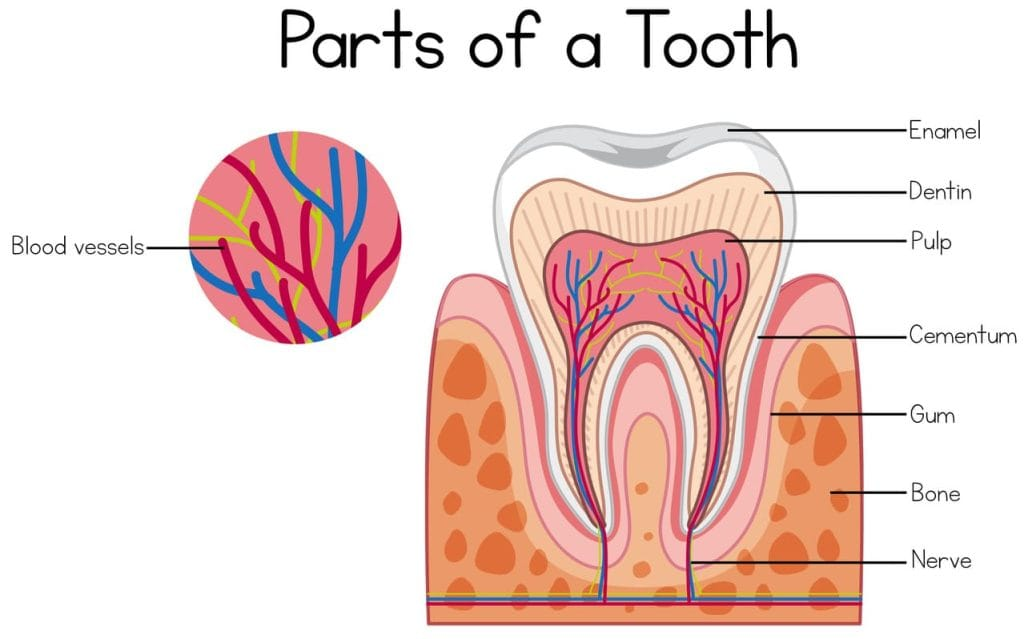
Zähne sind ein wesentlicher Bestandteil des Körpers zum Essen, Sprechen, Lächeln usw. Es gibt viele verschiedene Arten von Zähnen mit unterschiedlichen Namen. Es ist eines der stärksten Teile des menschlichen Körpers und besteht aus Zahnschmelz, Dentin, Zement und Pulpa. Lassen Sie uns den menschlichen Zahn mit dem anatomischen Diagramm unten verstehen und im Detail lernen.
Zahn Anatomie mit Diagramm und Namen
Teile der Zähne
Ein Zahn hat hauptsächlich zwei Teile:
- Krone: Die Zahnkrone ist der obere Teil des Zahns, den Sie klinisch in Ihrem Mund sehen können. Der Kronenbereich ist mit Zahnschmelz bedeckt, der ihn schützt.
- Wurzel: Die Wurzel ist unter normalen Bedingungen klinisch im Mund nicht sichtbar, da sie unter dem Zahnfleischrand verborgen ist, im Zahnhalteapparat oder im Alveolarknochen mit parodontalen Fasern fixiert ist, die den Zahn im Socket halten.
Woraus bestehen Zähne
Zähne bestehen aus Zahnschmelz, Dentin, Zement und Pulpa. (Schichten der Zähne)
- Zahnschmelz: Es ist die äußerste Schicht, die den Kronenbereich der Zähne bedeckt. Es ist die härteste Struktur im Körper, die die Zähne schützt.
- Dentin: Es ist die zweite Schicht unter der Zahnschmelzabdeckung, die der Zahnstruktur Masse verleiht. Es enthält dentinale Tubuli und ist nicht so hart wie Zahnschmelz, es bekommt leichter Karies als Zahnschmelz. Wenn Dentin aufgrund von Zahnschmelzverschleiß in der äußeren Umgebung exponiert ist, verursacht es dentinale Überempfindlichkeit, auch bekannt als Zahnsensibilität. Erfahren Sie mehr über Dentin/Dentine.
- Zement: Es bedeckt den Wurzelbereich des Zahns und verankert den Zahn mit parodontalen Fasern im Socket.
- Pulpa: Die Pulpa befindet sich in der Pulpa-Kammer, die der innerste Teil der Zähne ist. Die Pulpa besteht aus Blutgefäßen, Nerven und Bindegewebe. Sie versorgt den Zahn mit Nährstoffen und vermittelt Empfindungen.
Arten von Zähnen beim Menschen
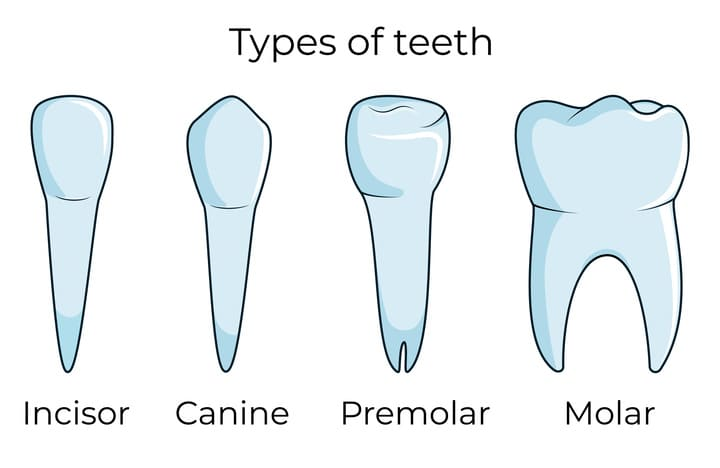
Es gibt vier Arten von Zähnen bei erwachsenen Menschen: Schneidezähne, Eckzähne, Prämolaren und Molaren; Prämolaren fehlen bei Kindern. Erwachsene Menschen haben 32 bleibende Zähne in ihrem Mund, und Kinder haben 20 Zähne in ihrem Mund.
Schneidezähne
Diese sind Ihre Frontzähne oder anterioren Zähne. Jeder Mensch hat insgesamt 8 Schneidezähne, sowohl bei Kindern als auch bei Erwachsenen, und hat zwei Arten von Schneidezähnen: 2 zentrale Schneidezähne und 2 seitliche Schneidezähne auf jeder Seite im Ober- und Unterkiefer.
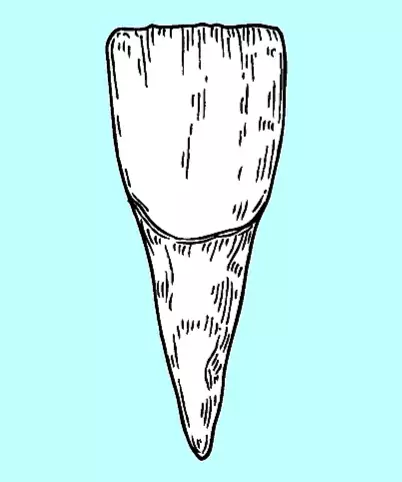
Schneidezähne sind flach und haben scharfe Kanten (meißelförmig), um in die Nahrung zu beißen und sie in kleinere Stücke zu schneiden.
Eckzähne
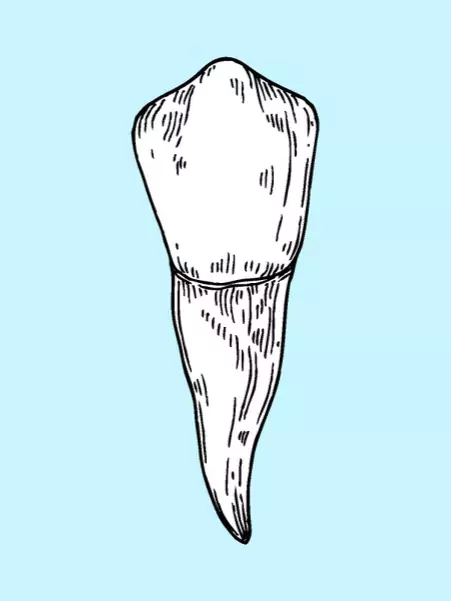
Es gibt insgesamt 4 Eckzähne, 1-1 Eckzahn auf jeder Seite im Ober- und Unterkiefer. Sie sind spitz zulaufende Zähne und werden hauptsächlich zum Zerreißen von Nahrungsmitteln verwendet. Eckzähne sind auch als Eckzähne bekannt.
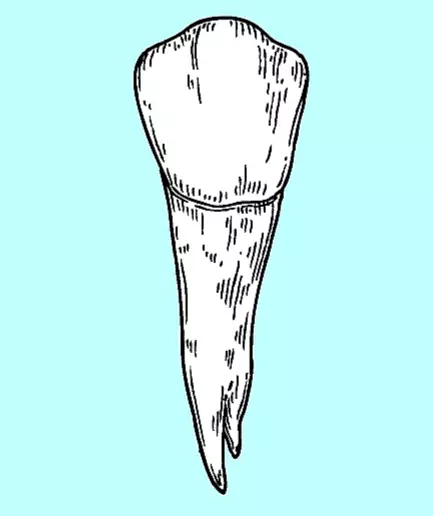
Prämolaren
Prämolaren sind insgesamt 8, 2-2 Prämolaren auf jeder Seite im Ober- und Unterkiefer. Prämolaren sind auch als Bicuspid bekannt. Sie werden hauptsächlich zum Schneiden und Mahlen von Nahrungsmitteln verwendet. Prämolaren fehlen bei Kindern.
Molaren
Molarzähne sind die größten Zähne mit großen Oberflächen, die ihnen helfen, Nahrung zu kauen und zu mahlen, um sie kleiner zu machen und das Schlucken zu erleichtern. Molaren sind insgesamt 12 bei Erwachsenen und 8 bei Kindern.
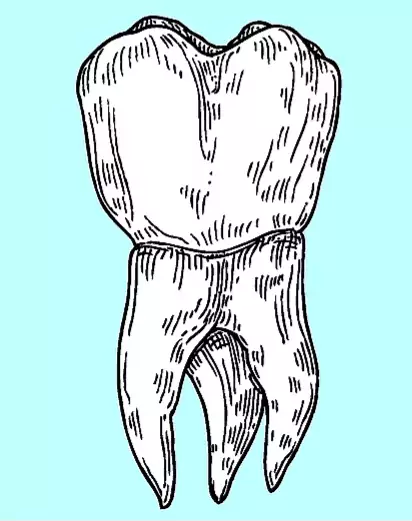
Kinder haben 2-2 Molaren auf jeder Seite im Ober- und Unterkiefer, und Erwachsene haben 3-3 Molaren (einschließlich Weisheitszähne, dem letzten 3. Molar) auf jeder Seite im Ober- und Unterkiefer. 3. Molaren oder Weisheitszähne fehlen bei Kindern.
Bei Kindern sind 20 Zähne vorhanden, die als Milchzähne oder primäre Zähne bekannt sind, auch bekannt als Milchzähne oder Babyzähne. Kinder haben hauptsächlich drei Arten von Zähnen: 8 Schneidezähne, 4 Eckzähne und 8 Molaren; Prämolaren sind bei Säuglingen nicht vorhanden. Der Zahndurchbruch beginnt mit den unteren zentralen Schneidezähnen. Später werden die Milchzähne oder temporären Zähne durch bleibende Zähne ersetzt.
Ein durchschnittlicher Erwachsener hat 32 Zähne in seinem Mund; auch bekannt als bleibende Zähne oder sukzedane Zähne oder Erwachsenenzähne. Erwachsene haben 8 Schneidezähne, 4 Eckzähne, 8 Prämolaren und 12 Molaren, einschließlich Weisheitszähnen.
Wie bereits erwähnt, haben erwachsene Menschen 32 bleibende Zähne, und Kinder haben 20 Milchzähne oder temporäre Zähne im Alter von 3 Jahren. Aber bei einigen Menschen gibt es weniger Zähne oder fehlende Zähne, oder in einigen Fällen können sie zusätzliche Zähne haben.
Weisheitszähne oder 3. Molaren sind die letzten Zähne im Mund; sie sind meist nicht funktional und werden nicht zum Kauen von Nahrung verwendet. Nicht alle Menschen haben Weisheitszähne, da sie manchmal von Zahnfleisch oder gingivalem Gewebe bedeckt sind und nicht im Mund (oral cavity) durchbrechen, auch bekannt als impaktierten Weisheitszahn. Dies verursacht Schmerzen bei der Bewegung des Weisheitszahns.
Zahnoberflächen
- Mesiale Oberfläche: Eine Zahnoberfläche, die nahe der Mittellinie oder der Mitte zwischen zwei Frontzähnen liegt, wird als mesiale Oberfläche bezeichnet.
- Distale Oberfläche: Eine Zahnoberfläche, die sehr weit oder entfernt von der Mittellinie oder der Mitte zwischen zwei Frontzähnen ist, wird als distale Oberfläche bezeichnet.
- Faciale Oberfläche: Eine Zahnoberfläche, die Ihrem Gesicht zugewandt ist. Für die anterioren Zähne ist es die labiale Oberfläche, und für die posterioren Zähne ist es die buccale Oberfläche.
- Labiale Oberfläche: Eine Zahnoberfläche, die den Lippen zugewandt ist, wird als labiale Oberfläche bezeichnet, wie bei Schneidezähnen und Eckzähnen.
- Buccale Oberfläche: Eine Zahnoberfläche, die der Wange zugewandt ist, wird als buccale Oberfläche bezeichnet, wie bei Prämolaren und Molaren.
- Okklusale Oberfläche: Eine Zahnoberfläche, die zum Kauen und Mahlen von Nahrung verwendet wird, wird als okklusale Oberfläche eines Zahns bezeichnet. Wie bei Prämolaren und Molaren.
- Inzisale Oberfläche: Eine Zahnoberfläche, die wie eine Schneidekante ist, wie die Schneidekante von Schneidezähnen.
- Proximale Oberfläche: Eine Zahnoberfläche, die dem nächsten Zahn zugewandt ist; zum Beispiel die mesiale Oberfläche des ersten Prämolaren und die distale Oberfläche des Eckzahns.
Funktionen der Zähne
Insgesamt helfen Zähne, Nahrung zu schneiden, zu reißen, zu mahlen und zu mischen. Schneidezähne schneiden normalerweise die Nahrung, Eckzähne reißen die Nahrung, und Molaren mahlen die Nahrungsmittel und verwandeln sie in einen vor dem Schlucken zu schluckenden Bissen. Zähne erleichtern auch die Sprachfunktion und die gesamte Gesichtsstruktur.
Zusammenfassung
Zähne sind ein wesentlicher Bestandteil unseres Körpers, der nicht nur beim Essen hilft, sondern auch beim Sprechen bestimmter Wörter, daher ist es wichtig, auf Ihre Zähne zu achten, denn die Erkrankung eines einzelnen Zahns macht Sie in Ihren täglichen Aktivitäten unwohl.
 Types of Teeth
Teeth are an essential part of the body for eating food, speaking, smiling, etc. There are many different types of teeth with different names. It’s one of the strongest parts of the human body and is made up of Enamel, Dentin, Cementum, and Pulp. Let’s understand the Human tooth with the anatomical diagram given below and learn in detail.
Tooth Anatomy with Diagram and Names
Parts of Teeth
A tooth has mainly two parts:
- Crown: The tooth Crown is the top portion of the tooth that you can clinically see in your mouth. The crown portion is covered by enamel, which protects it.
- Root : The root is clinically not visible in the mouth in normal conditions, as it is covered under the gum line, fixed in the tooth socket, or alveolar bone socket with periodontal ligaments that hold the tooth in the socket.
What Are Teeth Made of
Teeth are made up of Enamel, Dentin, Cementum, and Pulp. (Layers of Teeth)
- Enamel: It is the outermost layer covering the crown portion of teeth. It is the hardest structure in the body that protects the teeth.
- Dentin: It is the second layer beneath the enamel covering that provides the structural mass to teeth. It contains dentinal tubules, and it’s not as hard as enamel, and it gets cavities more easily than enamel. If dentin is exposed in the outer environment due to enamel wear, it causes dentinal hypersensitivity also known as teeth sensitivity. Learn more about Dentin/Dentine
- Cementum: It covers the root portion of the tooth and anchors the tooth with periodontal fibers within the socket.
- Pulp: Pulp is available in the pulp chamber, which is the innermost part of the teeth. Pulp is made up of Blood vessels, Nerves, and Connective tissue. It provides nourishment to the tooth and gives sensation to the tooth.
Types of Teeth in Humans
There are four types of teeth in adult humans. Incisors, Canines, Premolars, and Molars; Premolars are absent in children. Adult humans have 32 permanent teeth in their mouths, and children have 20 teeth in their mouths.
Incisors
These are your front teeth or anterior teeth. Every individual has a total of 8 incisors, both in children and adults, and has two types of incisor teeth, 2 central incisors, and 2 lateral incisors on each side in the upper and lower jaw.
Incisors are flat and have sharp edges (chisel-shaped) to bite into the food and cut it into smaller pieces.
Canines
There are 4 canines in total, 1-1 canine on each side in the upper and lower jaw. They are sharp pointed teeth and are mostly used for tearing down food items. Canines are also known as cuspids.
Premolars
Premolars are 8 in total, 2-2 premolars on each side in the upper and lower jaw. Premolars are also known as bicuspid. They are mainly used for cutting and grinding food items. Premolars are absent in children.
Molars
Molars are the largest teeth with large surface areas to help them chew and grind food to make it smaller and facilitate swallowing. Molar teeth are 12 in total in adults and 8 in number in children.
Children have 2-2 molars on each side in the upper and lower jaw, and adults have 3-3 molars (including Wisdom teeth, the last 3rd molar tooth) on each side in the upper and lower jaw. 3rd Molars, or Wisdom teeth, are absent in children.
In children, 20 teeth are present, and these are known as deciduous teeth or primary teeth, also known as milk teeth or baby teeth. Children have mainly three types of teeth: 8 Incisors, 4 Canines, and 8 Molars; premolars are not present in infants. Tooth Eruption starts with the lower central incisors. Later, primary teeth or deciduous teeth are replaced by permanent teeth.
An average adult human has 32 teeth in his/her mouth; also known as permanent teeth, or succedaneous teeth, or adult teeth. Adults have 8 Incisors, 4 Canines, 8 Premolars, and 12 molars teeth including Wisdom teeth.
As we discussed, adult humans have 32 permanent teeth, and children have 20 milk teeth or deciduous teeth at the age of 3 years. But in some people, they have less number of teeth or missing teeth, or in some cases, they may have extra teeth.
Wisdom teeth, or 3rd molars, are the last teeth in the mouth; mostly, they are not functional and are not used for chewing food. Not all people may have wisdom teeth, as sometimes they are covered by gums or gingival tissue and do not erupt in the oral cavity (mouth), also known as an impacted wisdom tooth. This causes pain in the movement of the wisdom tooth.
Tooth Surfaces
- Mesial Surface: A tooth surface that is close to the midline or center between two front teeth is called the mesial surface.
- Distal Surface: A tooth surface that is very far or away from the midline or center between two front teeth is called the distal surface.
- Facial Surface: A tooth surface is towards your face. For anterior teeth, it is the labial surface, and for the posterior teeth, it is the buccal surface.
- Labial Surface: A tooth surface facing towards the lips is called the labial surface, such as incisors, canines.
- Buccal Surface: A tooth surface facing towards the cheek is called the buccal surface, such as that of premolars and molars.
- Occlusal Surface: A tooth surface that is used for chewing and grinding food is called the occlusal surface of a tooth. Such as premolars and molars.
- Incisal Surface: A tooth surface that is like a cutting edge, like the cutting edge of incisors.
- Proximal Surface: A tooth surface facing the next tooth; for instance, the mesial surface of the first premolar and the distal surface of the canine.
Functions of Teeth
Overall, Teeth help cut, tear, grind, and mix food in humans. Incisors generally cut the food, canines tear the food, and molars grind the food items and convert them into a pre-swallow bolus. Teeth also facilitate the speaking function and overall facial structure.
Summing up
Teeth are an essential part of our body that not only help in eating food, but also help in speaking certain words, so it is important to take care of your teeth because the illness of a single tooth makes you uncomfortable in your day-to-day activities.